Starting Pilates is simpler than it looks. You can begin three ways:
- Attend a class
- Book a private lesson
- Practice at home
Below you’ll find what each option involves, how to choose among them, and what you actually need to begin.
Pilates Class
You can take a class at a dedicated Pilates studio or at a gym/fitness center. Both can work—your choice depends on teaching quality, equipment, and your learning style.
Class at a Pilates studio
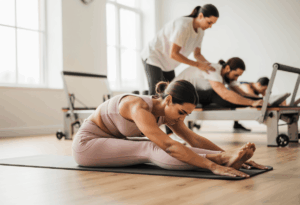
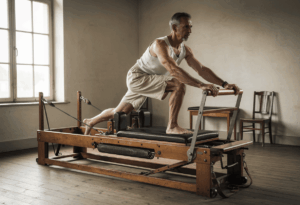
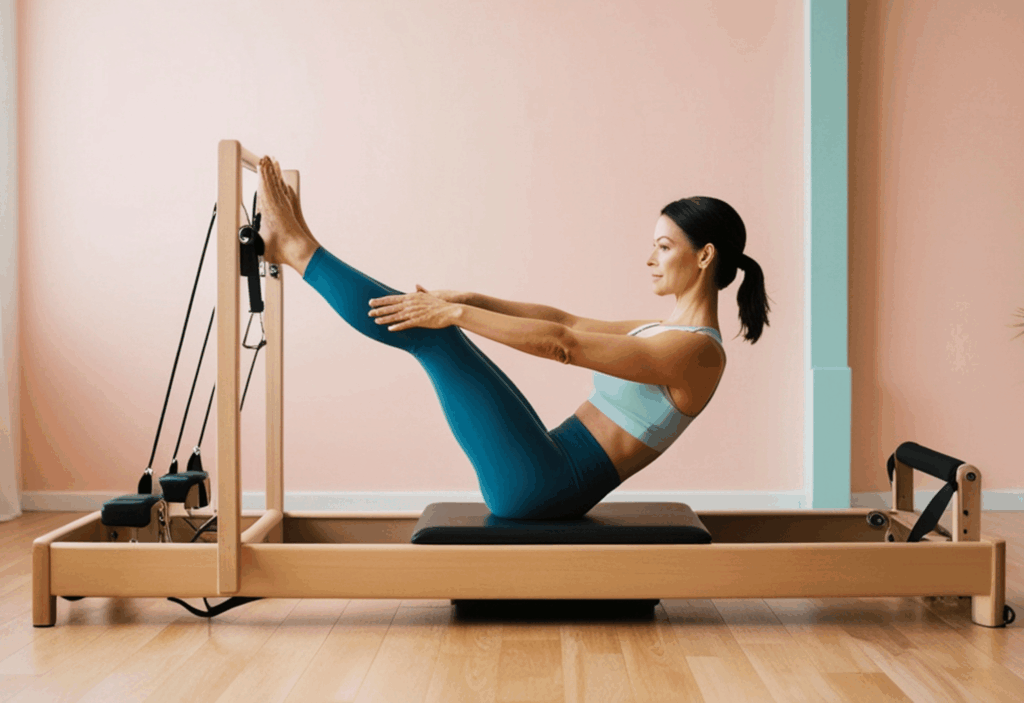
Studios focus on Pilates as their core service. Expect smaller groups, instructors trained specifically in Pilates, and access to mat plus apparatus (Reformer, Chair, Tower). New students often start with a short intake to flag prior injuries and goals.
What to look for
- Instructor credentials (recognized Pilates education, supervised teaching hours).
- Beginner-friendly sequencing with clear cueing for breath, alignment, and transitions.
- Options/modifications offered without pressure to “push through.”
Pros: personalized feedback, precise technique, progressive paths from beginner to intermediate.
Cons: typically higher price per class, scheduling may be tighter.
Class at a gym
Gyms usually offer mat classes in larger rooms. Instruction quality varies—some teachers are excellent, others more generalist. Class size can mean less 1:1 attention, but the environment is familiar and affordable.
What to look for
- Beginner labels (Level 1/Foundations) and a posted class description.
- Audible cues and demonstrations visible from the back of the room.
- Reasonable pacing that allows setup before each movement.
Pros: convenient schedule, lower cost, easy to pair with other gym activities.
Cons: less individual coaching; apparatus rarely available.
Private Lesson at a Pilates Studio
A private session gets you one-on-one coaching tailored to your history, posture, and goals. Expect a short movement screen, then guided work on mat and apparatus.
Typical logistics
- Rate: varies by region (often higher than group classes).
- Length: ~50–55 minutes.
- What to ask: instructor training, approach to injuries, and how they progress beginners.
Best for: new movers, anyone with pain history, or those who learn best with focused feedback.
Tip: Book one private before joining groups—it accelerates learning and helps you pick the right class level.
Pilates Exercise at Home
Home practice is flexible and cost-effective. Set up a safe space, get a mat, follow high-quality videos, and add simple equipment if desired.
Workout Space
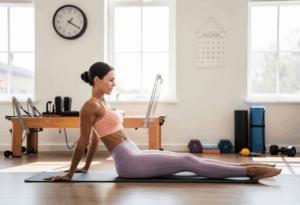
You need enough room to lie flat on your back and to lift your arms overhead without hitting lights or shelves; when side-lying, your top leg should swing freely without knocking furniture. Clear the floor of slips/trip hazards. (See page image illustrations showing arm reach and side-lying clearance.)
Pilates Mat
Choose a mat with more cushioning than a typical yoga mat—generally 10–15 mm helps protect the spine during roll-downs and side work. Non-slip surface matters on hard floors. If you have sensitive wrists or tailbone, consider an extra layer you can slide under those areas.
Pilates Videos
Select beginner-friendly titles or platforms with clear cueing, visible demonstrations, and options for regressions/progressions. Follow a structured path (e.g., 3–4 beginner sessions before advancing). Avoid random mashups that skip fundamentals like breath, neutral alignment, and segmental spinal movement.
Pilates Equipment
Starter add-ons can deepen feedback without cluttering your room:
- Mini ball: supports imprinting, adductor work, and breathing drills.
- Resistance band: gentle shoulder/scapular training and hip work.
- Magic circle: adduction/abduction control; great for upper-body integration.
Keep heavy equipment purchases minimal until you’ve built consistency.
Pilates Advice for Beginners
- Arrive 10 minutes early to your first class. Tell the instructor about injuries, surgeries, pregnancy, or pain.
- Choose a true beginner class (or Level 1). Foundations first; then build range, tempo, and complexity.
- Clothing: form-fitting but comfortable; avoid zippers/buttons that catch on mats and upholstery.
- Footwear: Pilates is typically done barefoot or with grip socks.
- Hydration & fuel: light snack if needed; avoid very heavy meals right before class.
- Progress gradually: change only one variable at a time—range, tempo, resistance, or base of support.
- If pain persists: pause and consult a qualified professional; resume with measured steps.
Conclusion
Whether you learn best in a studio, thrive in a gym setting, or prefer the calm of home, the best starting point is the one you’ll stick with. Prioritize clear instruction, steady progression, and regular practice; your posture, control, and confidence will follow.