Yes, Pilates can support weight loss, but not in the same way as high-intensity cardio or calorie-burning workouts. Pilates primarily improves muscle tone, posture, core strength, and body composition, which can indirectly lead to fat loss and a leaner appearance over time.
However, understanding how Pilates works and what it can and cannot do is essential before relying on it for weight management.
Key takeaways:
- Pilates supports weight loss mainly through muscle engagement and consistency.
- It is not a high-calorie-burn workout but improves body composition.
- Results depend heavily on frequency, intensity, and overall lifestyle.
How Pilates Contributes to Weight Loss
Pilates focuses on controlled movements, breathing, and deep muscle activation, especially around the core. Unlike cardio-based workouts, it does not aim to burn maximum calories per session. Instead, it improves movement efficiency and muscle endurance.
This leads to several indirect benefits related to weight management:
- Increased muscle tone, which slightly raises resting metabolism
- Improved posture and alignment, making the body appear leaner
- Better movement awareness, reducing sedentary habits
- Reduced stress, which may help regulate appetite and cortisol levels
Over time, these effects can support sustainable weight loss when Pilates is practiced consistently.
Does Pilates Help You Lose Weight Compared to Other Exercises?
To understand the role of Pilates in weight loss, it helps to compare it with other popular activities.
| Activity | Average calories burned (60 min) | Primary benefit |
| Pilates (mat, moderate) | 170–250 kcal | Core strength, posture |
| Pilates (reformer, intense) | 250–350 kcal | Muscle toning, control |
| Brisk walking | 250–300 kcal | Cardiovascular health |
| Running | 500–700 kcal | High calorie expenditure |
This comparison shows that Pilates burns fewer calories than high-intensity workouts. That said, calorie burn alone does not determine long-term results.
Pilates excels at building lean muscle, which helps the body use energy more efficiently throughout the day.
Can Pilates Lose Belly Fat?
A common question is whether Pilates can specifically target abdominal fat. The short answer is no exercise can spot-reduce fat, including Pilates.
However, Pilates is particularly effective at strengthening the deep core muscles, such as the transverse abdominis. As these muscles become stronger:
- The abdomen appears flatter and tighter
- Posture improves, reducing abdominal protrusion
- Core engagement increases during daily movement
So while Pilates does not directly burn belly fat, it can significantly improve waistline appearance when combined with appropriate nutrition and overall activity.
How Many Calories Does Pilates Burn?
The number of calories burned during a Pilates session depends on several factors:
- Type of Pilates (mat vs reformer)
- Intensity level
- Body weight
- Session duration
On average:
- Beginner mat Pilates: ~170 kcal/hour
- Intermediate mat Pilates: ~220 kcal/hour
- Reformer Pilates (vigorous): up to 350 kcal/hour
While this may seem modest, consistency plays a crucial role. Practicing Pilates 3–5 times per week can meaningfully contribute to a calorie deficit over time.
Why Pilates Alone May Not Be Enough for Weight Loss
Here is an important nuance many people overlook: Pilates alone rarely creates a large calorie deficit.
For individuals aiming for significant weight loss, relying solely on Pilates may lead to:
- Slow or minimal scale changes
- Frustration due to unrealistic expectations
That said, Pilates becomes highly effective when combined with:
- Moderate cardio (walking, cycling, swimming)
- Balanced nutrition
- Adequate sleep and stress management
This combination allows Pilates to enhance body composition while other elements drive fat loss.
How Often Should You Do Pilates to Lose Weight?
For weight loss, consistency beats duration.
- 3 sessions per week: improves tone and posture
- 4–5 sessions per week: supports fat loss when combined with daily movement
A session of 30–40 minutes is enough if the exercises remain controlled and continuous.
Does Pilates Intensity Matter?
Yes. Intensity matters more than time.
- Slow sessions = mobility and relaxation
- Dynamic sessions = higher muscle engagement and calorie use
A focused, challenging Pilates workout helps build lean muscle, which supports long-term weight management.
Key point: Pilates helps weight loss when sessions are regular and moderately intense, not occasional or passive.
Is Pilates Enough on Its Own?
In most cases, no.
Pilates supports weight loss best when paired with:
- Light cardio (walking, cycling)
- Balanced nutrition
- Adequate sleep
Used this way, Pilates reshapes the body while fat loss happens elsewhere.
Why the Scale Doesn’t Move with Pilates
One common frustration is that weight doesn’t change, even after several weeks of Pilates.
This happens because Pilates mainly:
- Builds lean muscle
- Improves posture and muscle engagement
- Reduces bloating through better core control
Muscle is denser than fat, so your body may look leaner without a big change on the scale.
How Pilates Changes Your Body First
Before weight loss shows up, most people notice:
- A flatter-looking waist
- Better abdominal control
- A more upright posture
These changes often appear before any visible fat loss, especially around the midsection.
Who Benefits Most from Pilates for Weight Loss?
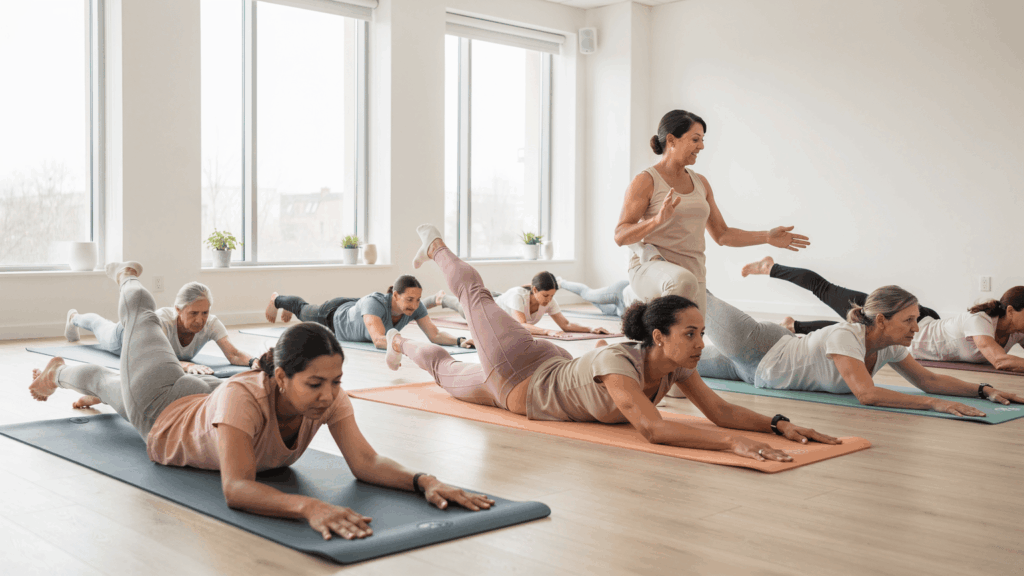
Pilates works best if you:
- Prefer low-impact exercise
- Are restarting physical activity
- Want sustainable, joint-friendly movement
It is less effective alone for people seeking rapid or large weight loss.
In Summary
Pilates can support weight loss by improving muscle tone, posture, and overall body awareness, but it does not lead to rapid fat loss on its own. It helps the body look leaner by strengthening deep muscles, especially around the core, which can reduce abdominal protrusion and improve silhouette before the scale changes. For meaningful weight loss, Pilates works best when practiced regularly and combined with daily movement, balanced nutrition, and healthy lifestyle habits. Used this way, it becomes a sustainable and joint-friendly tool that supports long-term weight management rather than quick results.