The 80/20 rule in Pilates is a simple principle: around 80% of your results come from focusing on 20% of the most effective movements and habits. In practice, this means that a small number of well-executed exercises, combined with consistency and proper technique, deliver the majority of physical benefits associated with Pilates.
Rather than doing long, exhausting sessions or chasing variety for its own sake, the 80/20 approach encourages precision, control, and intentional practice. This mindset aligns perfectly with the original philosophy of Pilates, which prioritizes quality over quantity.
Key takeaways:
- Most Pilates results come from a small set of fundamental exercises.
- Consistency and precision matter more than session length.
- The 80/20 rule helps avoid overtraining and wasted effort.
Pilates is not about burning maximum calories or performing endless repetitions. It is about neuromuscular efficiency, posture, breathing, and controlled movement. The 80/20 rule highlights that mastering core principles such as alignment, control, and breath produces far greater outcomes than constantly changing routines.
This principle is especially valuable for people who feel overwhelmed by complex workout plans or limited by time. Applying the 80/20 rule allows practitioners to train smarter, not longer, while still improving strength, flexibility, and body awareness.
Why the 80/20 Rule Fits Pilates So Well
Pilates is inherently a high-return discipline. Unlike many fitness methods that rely on volume or intensity, Pilates works through deep muscle activation and precise movement patterns. When these patterns are performed correctly, even short sessions can deliver noticeable improvements.
The reason the 80/20 rule works so well in Pilates lies in how the body responds to consistent, targeted stimulation. A limited number of foundational exercises such as controlled spinal articulation, core stabilization, and hip mobility activate multiple muscle chains at once.
From a physiological perspective, this approach reduces unnecessary fatigue while increasing motor control and muscular coordination. Over time, this leads to better posture, reduced pain, and improved movement efficiency in daily life.
A key nuance often overlooked is that doing more Pilates does not automatically mean better results. Poor technique, excessive repetition, or lack of recovery can actually slow progress. The 80/20 rule acts as a safeguard against these pitfalls by emphasizing what truly matters.
The Core Idea Behind the 80/20 Principle
The 80/20 rule, also known as the Pareto Principle, suggests that outcomes are rarely evenly distributed. In Pilates, this translates into a clear reality: a small portion of exercises drives most physical adaptation.
For example:
- A few core-focused movements influence posture and spinal stability.
- Select mobility exercises improve joint health across the entire body.
- Simple breathing patterns enhance muscle engagement and nervous system balance.
This does not mean other exercises are useless. Rather, it means that prioritization is essential, especially for beginners or people returning after a break.
One important point to understand is that progress plateaus faster when effort is scattered. Concentrating on high-impact movements allows the nervous system to adapt more efficiently, which explains why practitioners often see faster results with shorter, focused routines.
How to Apply the 80/20 Rule in a Pilates Practice
Applying the 80/20 rule in Pilates means identifying the few movements that deliver the greatest physical return and practicing them consistently with proper form. Instead of rotating dozens of exercises, the focus is on mastery and repetition with intention.
In most Pilates routines, the highest-impact exercises share common traits:
- They engage the deep core muscles
- They promote spinal mobility and alignment
- They reinforce controlled breathing
When these elements are combined, even a 20–30 minute session can produce meaningful results.
Checklist practice:
- Prioritize control over speed
- Focus on breathing with each movement
- Repeat key exercises consistently
Which Exercises Usually Fall into the “20%”?
While routines vary, the most effective Pilates exercises are typically foundational movements that activate multiple muscle groups at once. These include:
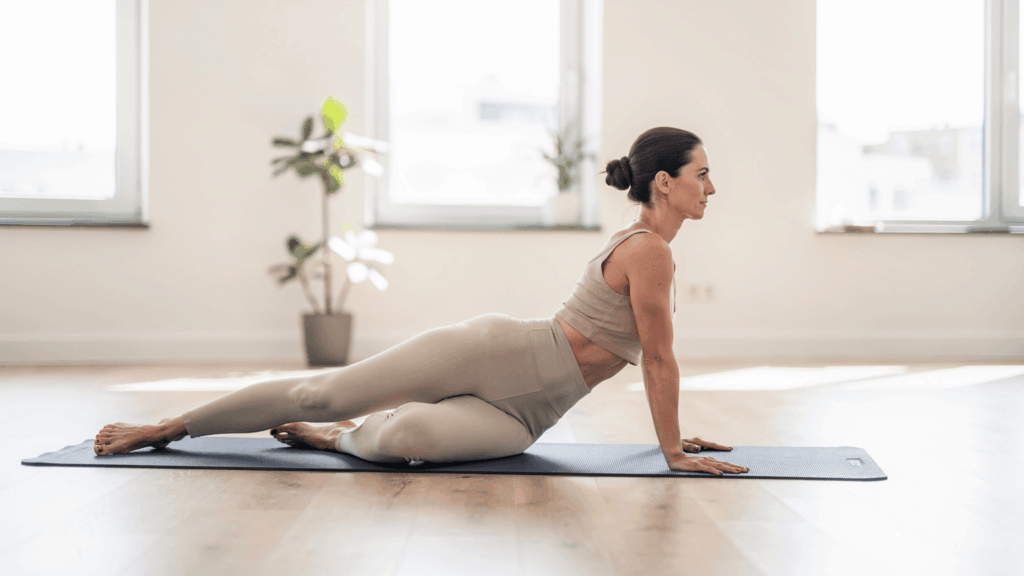
- Controlled spinal flexion and extension
- Core stabilization with neutral alignment
- Hip mobility paired with pelvic control
These exercises are not necessarily the hardest, but they are the most neurologically demanding, requiring coordination, balance, and concentration. This is why they generate such a high return on effort.
A useful rule of thumb is this: if an exercise improves posture, breathing, and core engagement simultaneously, it likely belongs in the 20%.
Does the 80/20 Rule Help with Fat Loss in Pilates?
The 80/20 rule in Pilates can support fat loss, but only when expectations are realistic. Pilates is not designed to burn large amounts of calories per session. Instead, it improves muscle activation, posture, and metabolic efficiency, which indirectly influence body composition.
By focusing on the most effective 20% of exercises, practitioners:
- Engage more muscle groups at once
- Reduce compensations that limit energy expenditure
- Improve movement quality, which supports long-term consistency
This matters because consistency is the real driver of fat loss, not session intensity alone.
Key fact: Pilates improves body composition mainly by enhancing muscle tone and movement efficiency, not by maximizing calorie burn.
A critical nuance is that Pilates alone may not create a calorie deficit for everyone. However, when the 80/20 rule is applied, sessions become more focused and physically demanding, which can increase overall daily activity and muscle engagement.
In simple terms, Pilates works best for fat loss when it is part of a broader lifestyle, rather than treated as a standalone weight-loss method.
Who Should Use the 80/20 Rule in Pilates?
The 80/20 rule in Pilates is especially useful for people who want results without complexity. It suits:
- Busy individuals with limited time
- Beginners who feel overwhelmed by long routines
- Experienced practitioners seeking refinement rather than intensity
By concentrating on key movements, the body learns faster and adapts more efficiently. This reduces frustration and lowers the risk of inconsistency, which is one of the main reasons people quit exercise programs.
A subtle but important point: doing too much too soon often leads to poor form, which limits results and increases the risk of discomfort. The 80/20 approach naturally prevents this by keeping sessions focused and intentional.
Common Mistakes to Avoid
Even with a simple rule, mistakes can happen. The most common ones include:
- Confusing simplicity with ease
- Rushing through movements instead of controlling them
- Constantly changing exercises instead of improving execution
The effectiveness of the 80/20 rule depends on how well the 20% is performed, not just on exercise selection. Precision and awareness remain essential.
Final Takeaway
The 80/20 rule in Pilates reminds us that quality outweighs quantity. A small number of well-executed exercises, practiced consistently, can deliver most of the physical and postural benefits Pilates is known for.
Rather than chasing variety or intensity, this approach encourages focus, sustainability, and long-term progress which is exactly what Pilates was designed to support.