Yes Pilates is generally safe during pregnancy when practiced with appropriate modifications and medical clearance. Many healthcare professionals encourage prenatal exercise because it helps support posture, mobility, and overall well-being. The key is adapting movements to your trimester, avoiding certain positions, and focusing on controlled breathing and stability rather than intensity.
Pilates is especially valued during pregnancy because it strengthens the deep core muscles, pelvic floor, and back areas that undergo major changes as the body adjusts to a growing baby. However, the answer to the common question “is pilates safe while pregnant” depends on how the exercises are performed and whether they are tailored to prenatal needs.
Key takeaways:
- Most healthy pregnancies allow prenatal Pilates with modifications.
- Avoid deep twists, lying flat on the back after mid-pregnancy, and high-intensity core work.
- Always consult a healthcare professional before starting or continuing exercise.
Why Pilates Can Be Beneficial During Pregnancy
Pregnancy changes the center of gravity, posture, and ligament stability. These changes often lead to lower-back discomfort, pelvic instability, or muscle tension. A carefully adapted Pilates routine can help counter these effects.
Core stability and posture support
Pilates emphasizes controlled movements and spinal alignment. Strengthening the stabilizing muscles of the abdomen and back helps reduce strain on the lower spine, which is particularly useful as the belly grows.
Pelvic floor strengthening
One of the major advantages of prenatal Pilates is its focus on pelvic floor activation, which supports the bladder, uterus, and bowel. Maintaining pelvic floor strength may also assist in postpartum recovery.
Improved breathing and relaxation
Breathing techniques used in Pilates encourage diaphragmatic breathing, which can support oxygen circulation and relaxation both important throughout pregnancy and especially helpful when preparing for labor.
Who Should Be Careful Before Practicing?
Although Pilates is considered low-impact, not every pregnancy is the same. Certain medical conditions require caution or complete avoidance of exercise until cleared by a physician.
You should seek medical advice first if you have:
- Placenta complications
- High-risk pregnancy conditions
- Severe pelvic or abdominal pain
- A history of recurrent miscarriage
- Unexplained bleeding or dizziness
Even in uncomplicated pregnancies, exercises should be adjusted trimester by trimester to accommodate physical changes and avoid excessive abdominal pressure.
Safe Pilates Guidelines by Trimester
Practicing Pilates during pregnancy can remain safe and beneficial when exercises are adapted to each stage. The body changes significantly across the three trimesters, which means movements, intensity, and positions must evolve accordingly.
First trimester
During early pregnancy, most women can continue their normal Pilates routine if they feel comfortable and have no medical restrictions. The focus should remain on gentle strengthening, breathing, and mobility, avoiding overheating or excessive fatigue.
Safe practices include:
- Light core stabilization exercises
- Controlled breathing work
- Gentle stretching and posture correction
- Low-impact strengthening movements
High-intensity abdominal work and exercises requiring breath holding should be avoided, as these may increase internal pressure.
Second trimester
As the belly grows, balance and posture begin to shift. From this stage, it is recommended to avoid lying flat on the back for long periods, as this position can reduce circulation in some cases. Exercises should move toward side-lying, seated, or elevated positions.
Recommended adjustments:
- Side-lying leg work
- Seated posture and shoulder strengthening
- Pelvic floor activation exercises
- Gentle hip mobility movements
Deep twisting movements and strong forward abdominal crunches should be minimized.
Third trimester
In late pregnancy, comfort, stability, and breathing become the priorities. Pilates sessions should focus on mobility, relaxation, and light strengthening rather than intensity.
Helpful exercises:
- Gentle pelvic tilts
- Supported squats
- Breathing and relaxation drills
- Light upper-body strengthening with support
Checklist for safe prenatal Pilates:
- Choose prenatal-adapted exercises only
- Stop immediately if dizziness or pain occurs
- Stay hydrated and avoid overheating
Pilates Exercises to Avoid During Pregnancy
While Pilates is safe during pregnancy when adapted, certain movements should be limited or avoided because they may place unnecessary pressure on the abdomen or compromise balance.
Exercises commonly avoided
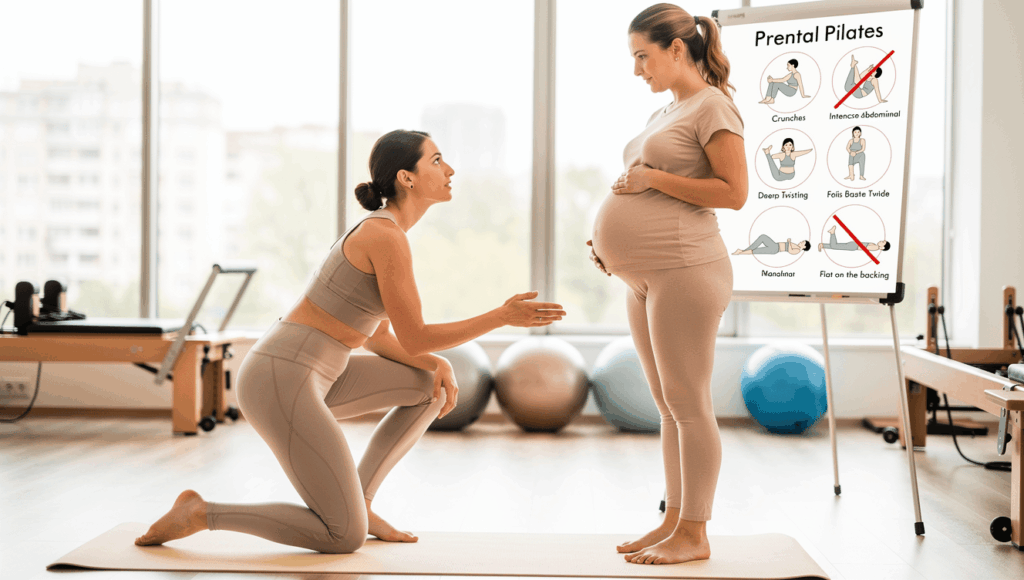
Some traditional Pilates exercises are not recommended during pregnancy, particularly after the first trimester:
- Full abdominal crunches or roll-ups, which can increase pressure on the abdominal wall
- Deep spinal twists, especially those compressing the belly
- Lying flat on the back for extended periods after mid-pregnancy
- High-impact or fast transitions, which may increase fall risk
- Exercises requiring breath holding, as proper oxygen flow is essential
A useful guideline is that any movement causing strain, discomfort, or abdominal bulging should be modified or stopped.
Why modifications matter
Pregnancy hormones such as relaxin increase ligament flexibility, which helps the body prepare for childbirth but also makes joints less stable. This means pushing flexibility too far can increase the risk of injury. Controlled, supported movements are therefore much safer than intense stretching.
A practical rule used in prenatal fitness is maintaining moderate effort levels, where conversation remains possible during exercise. If breathing becomes difficult or dizziness occurs, the session should be paused.
How to Start Prenatal Pilates Safely
Starting Pilates during pregnancy is usually safe for most healthy women when the routine is gentle, adapted, and progressive. Whether you are already active or beginning exercise for the first time, the key is to prioritize stability, breathing, and comfort rather than performance.
Practical steps to begin
Before starting, obtain approval from a healthcare professional, especially if you have any pregnancy-related concerns. Once cleared, choose prenatal-focused classes or guided routines, as these are specifically designed to avoid risky positions and movements.
Helpful beginner guidelines:
- Start with short sessions (15–25 minutes) and increase gradually
- Focus on breathing, posture, and pelvic floor activation
- Use supportive props such as pillows or cushions for comfort
- Avoid any movement that causes abdominal pressure, dizziness, or pain
A useful benchmark is maintaining moderate intensity, where breathing remains controlled and conversation is still possible. Many prenatal fitness specialists suggest exercising 2–4 times per week, depending on comfort and energy levels.
Summary: Is Pilates Safe While Pregnant?
For most pregnancies, the answer is yes Pilates can be a safe and highly beneficial activity when properly modified. It supports posture, helps strengthen the pelvic floor, reduces back discomfort, and prepares the body for childbirth. The most important factors are medical clearance, trimester-appropriate adaptations, and listening carefully to your body.
Women who consistently practice prenatal-adapted Pilates often report improved mobility, better body awareness, and easier recovery after delivery. If you begin gradually and follow safe guidelines, Pilates can remain a supportive part of a healthy pregnancy routine.