Yes Pilates does help with flexibility, but not in the same way as long, passive stretching. Pilates improves flexibility by increasing controlled range of motion, joint mobility, and muscle length under tension, which makes the gains more usable in daily life and sports.
Instead of forcing a stretch, Pilates trains the body to move with control through its full range, combining strength and length at the same time. This is why many people feel “looser” and more stable after a few weeks of practice.
Key takeaways:
- Pilates improves flexibility through controlled movement, not passive stretching.
- It increases usable range of motion while maintaining joint stability.
- Consistency matters more than intensity for long-term flexibility gains.
Flexibility is often misunderstood as simply being able to touch your toes. In reality, true flexibility involves muscle elasticity, joint mobility, and nervous system control. Pilates targets all three.
How Pilates Approaches Flexibility Differently
Pilates was designed to create a body that is both strong and supple. Each exercise asks the muscles to lengthen while they are working, which is very different from holding a static stretch.
Lengthening under control
During Pilates movements, muscles are trained to elongate while maintaining engagement. This approach helps prevent overstretching and reduces the risk of injury, especially for people who feel tight but unstable.
For example, instead of passively stretching the hamstrings, Pilates strengthens them through a full range, improving flexibility without sacrificing support.
Joint mobility, not just muscle stretch
Many flexibility issues come from restricted joint movement, not short muscles. Pilates emphasizes spinal articulation, hip mobility, and shoulder control, which helps restore smooth, coordinated motion across the body.
Over time, this improves how the joints move relative to each other a key factor in sustainable flexibility.
Nervous system adaptation
Flexibility is also influenced by the nervous system. When movements feel unsafe or uncontrolled, the body limits range of motion as a protective response. Pilates teaches precise, mindful movement, which gradually signals safety to the nervous system and allows greater mobility.
What Kind of Flexibility Can You Expect from Pilates?
Pilates does not aim for extreme contortion-style flexibility. Instead, it builds functional flexibility the kind that supports posture, balance, and daily movement.
Common areas that improve include:
- Spinal flexibility, especially through the thoracic spine
- Hip mobility, particularly hip flexors and glutes
- Hamstring length, without excessive strain
- Shoulder and chest openness, useful for desk workers
Donnée-clé : Many people notice improved mobility within 3–4 weeks when practicing Pilates 2–3 times per week.
This type of flexibility translates directly into better posture, reduced stiffness, and smoother movement patterns.
Pilates vs Stretching vs Yoga for Flexibility
Pilates improves flexibility, but it works differently from traditional stretching or yoga. Understanding these differences helps set realistic expectations.
Pilates vs static stretching
Static stretching focuses on holding a muscle in a lengthened position. It can temporarily increase flexibility, but gains often fade if not paired with strength.
Pilates, on the other hand, improves flexibility by:
- Moving joints through a controlled range of motion
- Strengthening muscles while they lengthen
- Teaching the body to maintain mobility under load
This makes Pilates especially useful for people who feel tight and unstable.
Pilates vs yoga
Yoga often emphasizes end-range positions and longer holds, which can lead to greater passive flexibility over time. Pilates prioritizes alignment, control, and precision, which results in more functional flexibility.
In simple terms:
- Yoga builds range
- Pilates builds control within that range
Many people find Pilates more approachable if they are stiff, recovering from injury, or concerned about joint safety.
Is Pilates enough to become flexible?
For most adults, yes Pilates is enough to noticeably improve flexibility, especially in:
- The spine
- The hips
- The shoulders
- The hamstrings
However, if your goal is extreme flexibility (splits, deep backbends), Pilates alone may not be sufficient. It excels at building usable, sustainable flexibility, not maximal range.
Who benefits most from Pilates for flexibility?
Pilates is especially effective if you feel stiff, tight, or restricted, but not necessarily weak. It works well for people who want to move better without forcing their body into uncomfortable stretches.
Pilates is particularly helpful for:
- People who sit a lot and feel tight in the hips and spine
- Beginners who find stretching frustrating or ineffective
- Athletes who want mobility with control
- Anyone recovering from minor injuries or dealing with joint discomfort
Because movements are controlled, Pilates improves flexibility without stressing the joints, making it suitable for a wide range of ages and fitness levels.
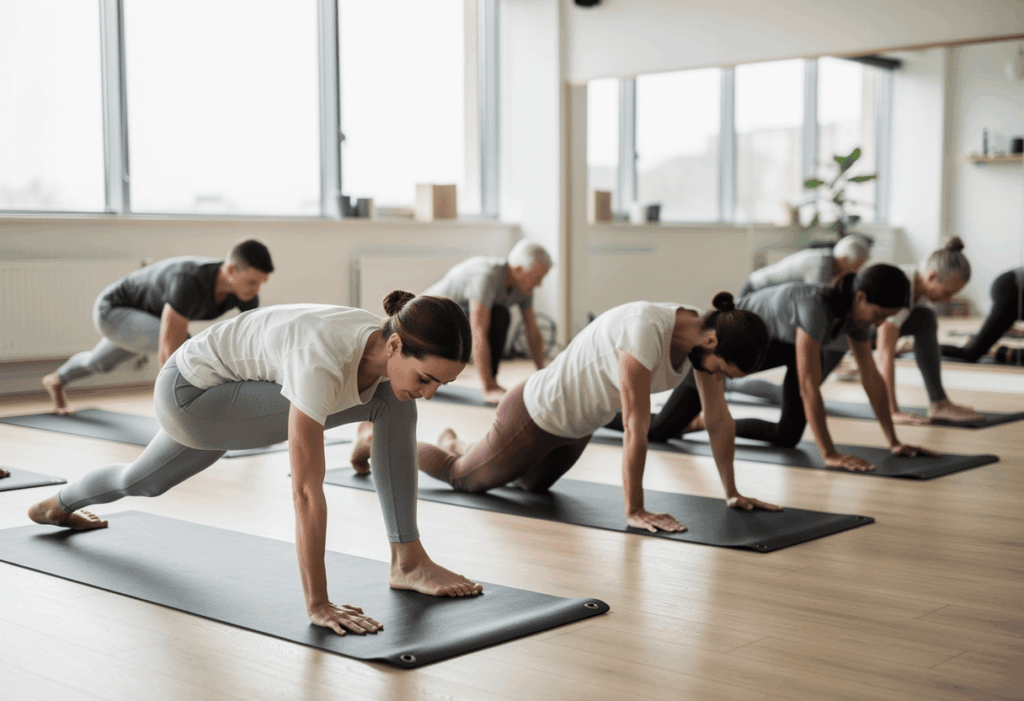
How often should you practice Pilates to improve flexibility?
You don’t need daily sessions to see results. What matters most is consistency.
A realistic guideline:
- 2–3 sessions per week for noticeable mobility gains
- Sessions of 20–45 minutes are sufficient
- Results usually appear within 3–6 weeks
Practicing more often may speed up progress, but flexibility improvements still depend on quality of movement, not volume.
What Pilates does better than flexibility-only routines
Pilates trains the body to use flexibility, not just possess it. This reduces the risk of feeling loose but unstable a common issue with passive stretching alone.
The result is a body that feels:
- More mobile
- More coordinated
- Less stiff during everyday movements
Should you choose Pilates if flexibility is your main goal?
If your goal is to feel less stiff, move more freely, and stay strong at the same time, Pilates is an excellent choice. It improves flexibility by teaching your body how to move through its range safely, not by forcing deeper stretches.
Pilates is ideal if you want:
- Better daily mobility
- Flexibility that supports posture and balance
- A method that feels controlled and joint-friendly
If you’re aiming for maximum range (splits or extreme backbends), Pilates alone may not be enough. In that case, combining Pilates with occasional stretching or yoga can be effective as long as mobility is supported by strength.
Pilates doesn’t chase flexibility. It builds it gradually, in a way your body can actually use.
That’s what makes the results feel sustainable not just impressive, but functional.