Many beginners ask the same question before starting Pilates: how long does it actually take to see results?
In most cases, people begin to notice initial improvements within 2 to 4 weeks of consistent practice. Visible changes in strength, posture, and muscle tone often appear after 6 to 8 weeks, especially if Pilates is performed 2–4 times per week. However, the exact timeline depends on several factors including your starting fitness level, session frequency, and the type of Pilates you practice.
Pilates focuses on controlled movements, core strength, flexibility, and body awareness. Unlike high-impact workouts that may produce rapid aesthetic changes, Pilates works gradually by improving the deep stabilizing muscles, posture, and movement patterns. The result is often long-lasting strength and balanced muscle development rather than quick but temporary changes.
Key takeaways:
- Many people feel early improvements from Pilates within 2–4 weeks.
- Visible changes in posture, muscle tone, and flexibility often appear around 6–8 weeks.
- Consistency (2–4 sessions per week) plays the biggest role in results.
Pilates instructor Joseph Pilates famously claimed that after 10 sessions you feel the difference, after 20 sessions you see the difference, and after 30 sessions you have a new body. While this quote isn’t a strict scientific rule, it reflects the gradual transformation Pilates tends to produce.
Why Pilates Results Take Time
Pilates targets deep stabilizing muscles, especially those surrounding the spine and pelvis. These muscles are rarely activated in daily life or traditional workouts, which means it can take time for the body to strengthen them.
The role of neuromuscular adaptation
One key reason results appear progressively is neuromuscular adaptation. During the first weeks of Pilates practice, the body learns how to:
- Activate the core muscles correctly
- Maintain neutral spine alignment
- Control movements with precision and breathing
These adaptations improve movement efficiency and posture before visible muscle changes occur.
Early results most people notice
Within the first few weeks, many beginners report:
- Better posture
- Reduced lower-back discomfort
- Improved core awareness
- Greater flexibility and mobility
These early changes often happen before visible aesthetic results, which is why some people underestimate their progress at the beginning.
Another important point: Pilates emphasizes quality over quantity. Performing fewer repetitions with precise control often produces better long-term results than rushing through exercises.
What Changes Can You Expect After a Few Weeks of Pilates?
The results from Pilates usually appear gradually but consistently when sessions are performed several times per week. Most practitioners begin noticing physical and functional improvements within the first month.
Weeks 1–2: Body awareness and core activation
During the first two weeks, the biggest changes happen internally. Your body learns how to properly activate the deep core muscles, including the transverse abdominis and pelvic stabilizers.
Common early sensations include:
- Improved posture
- Greater body awareness
- A stronger connection between breathing and movement
- Slight improvements in flexibility
These early improvements often feel subtle but they are important. Pilates trains the body to move with precision and control, which lays the foundation for visible results later.
Weeks 3–4: Strength and mobility improvements
By the third or fourth week, most people begin to notice measurable progress in core strength and stability. Exercises that felt difficult during the first sessions become easier because the stabilizing muscles start working more efficiently.
Typical changes at this stage include:
- Stronger core stability
- Increased mobility in the hips and spine
- Better balance and coordination
- Less tension in the neck and shoulders
Key data : Many instructors observe that practicing Pilates 2–3 times per week can already lead to noticeable improvements in posture and core strength within the first month.
Weeks 6–8: Visible muscle tone
After about 6 to 8 weeks of consistent practice, physical changes become easier to see. This is when Pilates begins to reshape the body by strengthening deep muscles and improving alignment.
You may notice:
- A flatter and stronger core
- Improved muscle tone in the legs and glutes
- More defined shoulders and back
- A taller, more upright posture
Unlike high-intensity workouts that focus mainly on calorie burn, Pilates improves muscle balance and alignment, which often creates a lean and toned appearance rather than bulky muscle mass.
What Factors Influence How Fast You See Pilates Results?
Even though many people notice changes within 4–8 weeks, the speed of your progress depends on several key factors. Pilates rewards consistency and technique, so small differences in practice habits can significantly influence results.
1. Workout frequency
The number of sessions per week plays the biggest role. Practicing Pilates occasionally may still improve mobility, but regular practice accelerates results.
A common guideline looks like this:
| Pilates frequency | Typical timeline for noticeable results |
| 1 session/week | Slow progress, subtle improvements after several months |
| 2 sessions/week | Visible posture and strength changes in about 6–8 weeks |
| 3–4 sessions/week | Faster results, sometimes noticeable within 3–4 weeks |
The key is consistency over intensity. Even shorter sessions performed regularly tend to deliver better results than long but infrequent workouts.
2. Starting fitness level
Your starting point also matters. Beginners often experience faster initial progress because the body adapts quickly to new movement patterns.
For example:
- People new to exercise may quickly improve core strength and posture
- Athletes may notice improvements in stability and mobility
- Those recovering from sedentary habits often gain better spinal alignment and flexibility
Interestingly, many people begin to feel improvements in posture and movement control before any visible physical changes appear.
3. Lifestyle and recovery
Pilates results are also influenced by everyday habits such as:
- Sleep quality
- Nutrition
- Daily movement and posture
- Stress levels
For instance, someone practicing Pilates consistently but sitting for 8–10 hours per day with poor posture may progress more slowly than someone who maintains good daily movement habits.
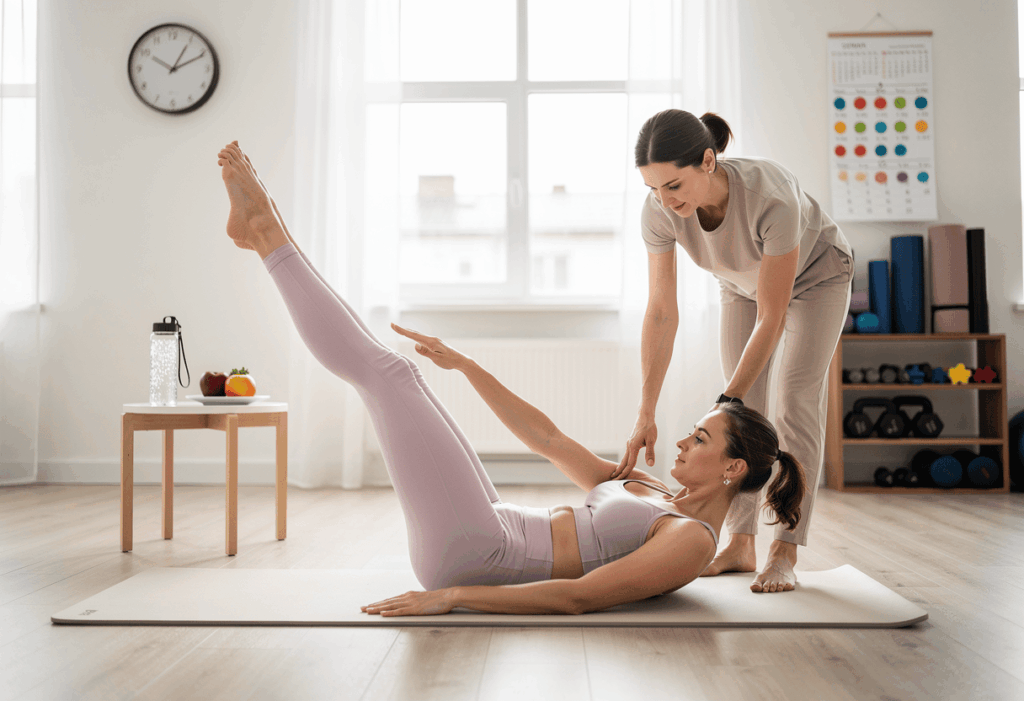
How to Get Pilates Results Faster
While Pilates already delivers gradual and sustainable improvements, a few simple strategies can help you see results sooner while still respecting the method’s principles.
Focus on consistency
The most important factor is practicing Pilates regularly. Instead of doing occasional long workouts, aim for shorter but consistent sessions throughout the week.
A practical routine could be:
- 2 to 3 sessions per week for beginners
- 3 to 4 sessions per week for faster progress
- Sessions lasting 30 to 60 minutes
Consistency allows the body to strengthen the deep core muscles, which is the foundation of most Pilates results.
Checklist:
- Practice Pilates at least 2–3 times per week
- Focus on controlled movements and breathing
- Stay consistent for 6–8 weeks before evaluating results
Prioritize technique over speed
Pilates is not about performing many repetitions quickly. The effectiveness of the exercises depends on precision, control, and breathing. Practicing slowly with correct alignment activates the deep stabilizing muscles, which are responsible for posture and core strength.
Many beginners progress faster when they focus on quality of movement rather than intensity.
Combine Pilates with healthy habits
Your lifestyle outside of training also influences how quickly results appear. Supporting your Pilates practice with healthy habits can make a noticeable difference.
Helpful habits include:
- Maintaining good posture during daily activities
- Staying physically active between workouts
- Getting enough sleep and recovery
- Following a balanced diet
These elements help the body adapt and strengthen more efficiently.
Final Thoughts
So, how long does it take to see results from Pilates?
For most people:
- 2–4 weeks: improved posture, flexibility, and body awareness
- 6–8 weeks: visible muscle tone and stronger core
- 3 months and beyond: significant improvements in strength, alignment, and overall body control
Pilates is designed to create long-term strength and balanced movement, not just quick aesthetic changes. With consistent practice, many people experience improvements not only in appearance but also in mobility, posture, and everyday comfort.