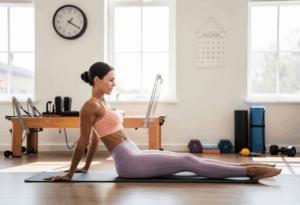
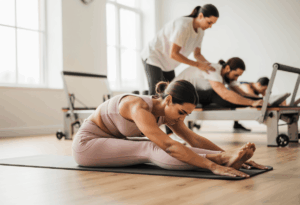
Mat Pilates is a form of Pilates performed on the floor using a simple exercise mat. It relies on bodyweight resistance, controlled movements, and intentional breathing to strengthen the core and improve overall body alignment.
Unlike machine-based Pilates, Mat Pilates focuses entirely on how you control your own body in space. It is accessible, low-impact, and adaptable for beginners and advanced practitioners alike.
Key points to remember :
- Mat Pilates strengthens the core using bodyweight on a floor mat.
- It improves posture, flexibility, and muscular control.
- It is low-impact and suitable for most fitness levels.
Mat Pilates is built around six foundational principles: control, precision, centering, concentration, breath, and flow. These principles transform simple-looking exercises into highly effective strength and stability work.
While it may appear gentle, consistent Mat Pilates practice can significantly improve functional strength and posture within several weeks when performed regularly.
How Mat Pilates Works
Mat Pilates targets the body differently from traditional strength training. Instead of lifting heavy weights, it emphasizes deep muscle activation and spinal alignment.
Core Activation
The core often called the “powerhouse” includes:
- Deep abdominal muscles
- Lower back stabilizers
- Pelvic floor muscles
- Glutes
Every exercise begins with engaging these muscles. This constant activation improves spinal support and postural stability.
Controlled Tempo
Movements are slow and deliberate. Rushing reduces effectiveness. A properly executed 8–10 repetitions can be more challenging than 20 uncontrolled reps.
An important point: meaningful neuromuscular adaptation generally requires at least 2–3 sessions per week for 6–8 weeks. Practicing occasionally will not produce noticeable structural changes.
Breath Coordination
Breathing patterns are synchronized with movement. Exhaling during effort enhances abdominal engagement and supports core stability.
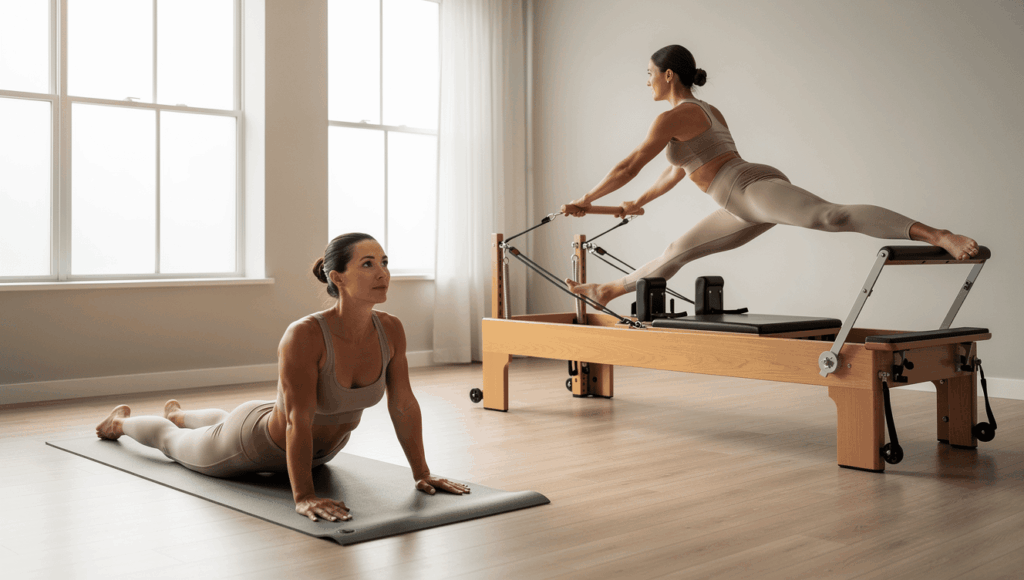
Mat Pilates vs Reformer Pilates
Many people wonder whether Mat Pilates is as effective as reformer classes. The difference lies mainly in equipment and resistance.
| Feature | Mat Pilates | Reformer Pilates |
| Equipment | Floor mat | Reformer machine |
| Resistance | Bodyweight | Adjustable springs |
| Accessibility | High | Studio-based |
| Cost | Low | Higher |
Mat Pilates may appear simpler, but advanced exercises such as teasers or plank variations demand significant strength and coordination.
For those practicing at home, investing in a high-density non-slip Pilates mat ensures better joint support and stability during movements.
Who Should Try Mat Pilates?
Mat Pilates suits a wide range of individuals because it is adaptable and low-impact.
Beginners
It builds foundational strength without stressing joints. Movements can be modified easily.
Desk Workers
Long hours of sitting often lead to weak glutes and tight hip flexors. Mat Pilates addresses these imbalances through controlled strengthening and mobility work.
Athletes
Athletes use Mat Pilates to improve stability, balance, and injury prevention. Strengthening smaller stabilizer muscles reduces strain on larger muscle groups.
Key data : Practicing Mat Pilates 3 times per week can noticeably improve posture and core endurance within 4–6 weeks.
However, individuals with acute spinal injuries or recent surgeries should consult a healthcare professional before beginning.
What Happens in a Typical Mat Pilates Class?
A standard session lasts between 45 and 60 minutes and follows a structured progression.
Warm-Up
- Gentle spinal articulation
- Breathing drills
- Pelvic mobility work
Main Sequence
Common exercises include:
- The Hundred
- Single-leg stretch
- Roll-ups
- Side-lying leg series
These movements challenge coordination while maintaining alignment.
Cool Down
- Controlled stretching
- Deep breathing
- Light spinal mobility
Unlike high-intensity training, Mat Pilates leaves you feeling strong yet refreshed, not exhausted.
Can Mat Pilates Help With Weight Loss?
Mat Pilates is not primarily a calorie-burning workout. Its benefits center around:
- Improving muscular tone
- Enhancing posture
- Increasing flexibility
- Strengthening the deep core
That said, improved muscle activation can support metabolic efficiency. For weight loss, combining Mat Pilates with cardiovascular exercise and balanced nutrition is more effective.
Doing Mat Pilates at Home
One of the greatest advantages of Mat Pilates is accessibility. You only need:
- A quality Pilates mat
- Comfortable clothing
- Clear floor space
Choosing a thicker, supportive mat reduces pressure on the spine and hips, especially during rolling exercises and plank variations.
Consistency is key. Practicing 20–30 minutes, three times per week delivers better results than one long session per week.
Final Thoughts
Mat Pilates is a low-impact, highly focused strength method that improves core stability, posture, flexibility, and body awareness. It requires minimal equipment yet offers scalable difficulty levels.
Whether you’re a beginner building foundational strength or an athlete refining stability, Mat Pilates provides structured, intentional movement that enhances how your body performs daily activities.
If you’re starting at home, ensure you use a supportive non-slip mat to maintain alignment and joint comfort throughout your practice.