Yes, for many people, 20 minutes of Pilates a day can be enough to improve posture, core strength, flexibility, and overall body awareness. However, whether it is truly sufficient depends on how those minutes are used, your fitness level, and your personal goals.
Pilates is not about intensity in the traditional sense. It focuses on controlled movement, precision, and muscle engagement, particularly of the deep core muscles. Because of this, a short but well-structured session can deliver meaningful benefits when practiced consistently.
That said, 20 minutes will not deliver the same outcomes for everyone. Someone using Pilates for rehabilitation or posture improvement may see excellent results, while a person aiming for major fat loss or athletic conditioning may need additional training volume.
Key takeaways:
- 20 minutes of Pilates can be effective if the session is focused and well-structured
- Consistency matters more than session length
- Results depend on your goal: mobility, strength, posture, or conditioning
Why Pilates Works Even in Short Sessions
Pilates is designed around quality over quantity. Unlike workouts that rely on exhaustion or heavy loads, Pilates activates stabilizing muscles that are often neglected in traditional strength training.
A focused 20-minute routine typically includes:
- Core engagement through controlled breathing
- Slow, precise movements targeting multiple muscle groups
- Continuous muscular tension rather than momentum
This approach creates a strong neuromuscular stimulus, meaning your muscles are actively working the entire time. In practice, this makes 20 minutes of Pilates far more demanding than it may appear from the outside.
Another key factor is mind-muscle connection. Pilates encourages constant awareness of alignment, posture, and breath, which improves efficiency and reduces injury risk over time.
What 20 Minutes of Pilates Can Realistically Improve
A daily 20-minute Pilates practice can lead to measurable improvements, especially for beginners and intermediate practitioners.
Core strength and posture
Pilates is particularly effective at strengthening the transverse abdominis, pelvic floor, and spinal stabilizers. Over time, this leads to:
- Better posture
- Reduced lower back discomfort
- Improved balance and coordination
Mobility and flexibility
Regular short sessions help maintain joint mobility and muscle elasticity, especially in the hips, spine, and shoulders.
Stress regulation
Because Pilates emphasizes breathing and control, even a short session can lower stress levels and improve body awareness.
However, it is important to understand what 20 minutes will not do on its own. Significant muscle hypertrophy, high-level cardiovascular conditioning, or rapid fat loss usually require additional training modalities or longer sessions.
Who Benefits Most From 20 Minutes of Pilates a Day?
A 20-minute daily Pilates routine is especially effective for certain profiles. Understanding whether it fits your needs is essential to avoid unrealistic expectations.
Beginners and sedentary individuals
For people new to exercise, 20 minutes of Pilates is often more than enough to start seeing benefits. At this stage, the priority is learning correct movement patterns, breathing, and core engagement.
Results commonly include:
- Improved posture and body awareness
- Reduced stiffness and back discomfort
- Better coordination and balance
Because Pilates targets deep stabilizing muscles, beginners can progress quickly without feeling overwhelmed.
People focused on posture, mobility, and pain prevention
If your goal is to move better, not necessarily harder, a short daily Pilates session works extremely well. Pilates is frequently used to support spinal health and joint stability.
For this audience, consistency matters more than duration. A daily 20-minute routine often outperforms longer but irregular workouts.
Busy schedules and low-impact needs
Pilates is ideal for people who:
- Have limited time
- Need a low-impact form of exercise
- Want a sustainable daily habit
Short sessions reduce mental resistance and improve long-term adherence, which is one of the strongest predictors of physical progress.
Key data : Consistent low-volume training often produces better long-term results than sporadic long sessions.
When 20 Minutes of Pilates May Not Be Enough
While 20 minutes of Pilates a day is effective for many people, it has clear limitations depending on your objective.
Fat loss goals
Pilates improves muscle tone and posture, but its caloric demand remains moderate. On its own, a short daily session is usually not enough to create a significant calorie deficit.
For weight-related goals, Pilates works best when:
- Combined with walking or cardio
- Paired with nutrition awareness
- Used as a complement, not the only activity
Athletic performance and strength
If your goal is to build strength or improve athletic output, 20 minutes may be insufficient stimulus. Pilates develops control and stability, but heavier loading or longer sessions are often needed for progression.
Adaptation over time
One important limitation is plateau effect. Performing the same short routine daily can reduce results once your body adapts.
A simple rule:
- Beginners → 20 minutes is effective
- Intermediate → progression or longer sessions needed
- Advanced → Pilates should complement other training
How to Make 20 Minutes of Pilates Truly Effective
If you only have 20 minutes a day, the key is not doing more it’s doing better.
To get real results, your session should follow three simple principles:
- Focus on full-body movements, not isolated exercises
- Maintain constant control and tension, especially through the core
- Progress gradually, by increasing difficulty, precision, or complexity
A short Pilates session works best when it includes:
- A brief warm-up focused on breathing and spinal mobility
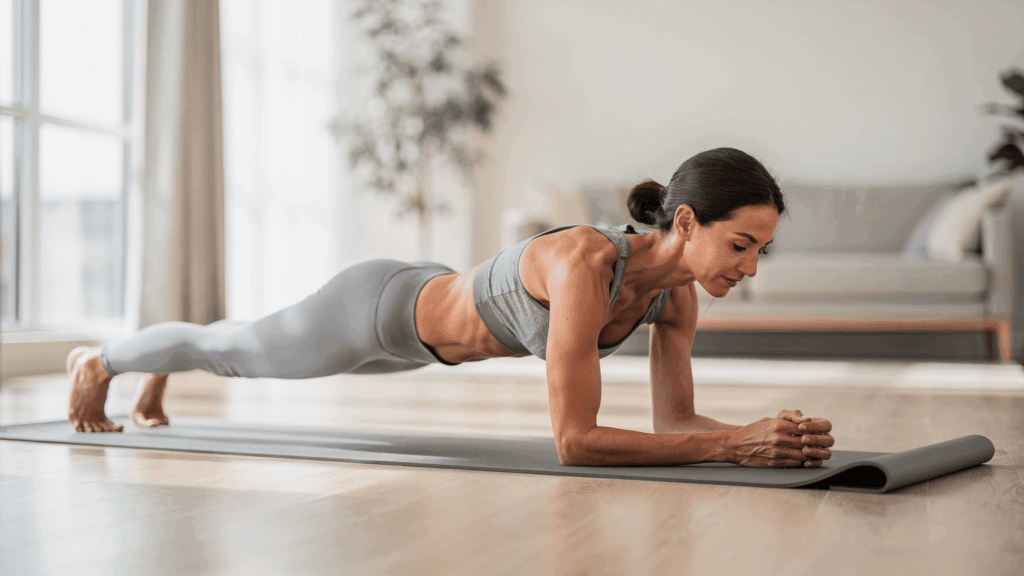
- Core-centered exercises (planks, roll-ups, leg work)
- Controlled transitions to keep muscles engaged continuously
Even within 20 minutes, this structure creates a strong training stimulus.
Practical checklist :
- Move slowly and with control
- Engage the core in every exercise
- Avoid repeating the exact same routine every day
Final answer
Yes, 20 minutes of Pilates a day can be enough if your goal is posture, mobility, core strength, and long-term consistency. For fat loss or performance, it works best as a complement rather than a standalone solution. The real power of Pilates lies in regular practice, not long workouts. Done correctly, even short sessions can deliver lasting results.