Neutral Head and Cervical Area
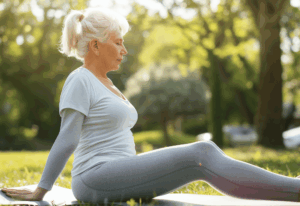
When the head and cervical spine (neck) are in neutral, we’re aiming for the natural, slight forward curve (cervical lordosis). In this position the head balances over the neck and shoulders instead of hanging forward or tipping back. This is true standing, sitting, and lying down—and since us Pilates-folk spend plenty of time supine, it matters even more there.
Keep the line of the whole spine continuous to avoid neck strain. If you move into:
- Spinal flexion (curving forward), the head and neck also follow with a small, supportive forward curve.
- Spinal extension (torso arcing back), the head and neck likewise extend slightly to stay in line.
Your eyes help set this alignment. A simple rule of thumb: in extension, let your gaze go forward and a touch upward; in flexion, let your eyes drift slightly downward. Think of the gaze as a soft steering wheel for the skull so the neck doesn’t do any abrupt hinging.
Head Nod in Pilates For Protection
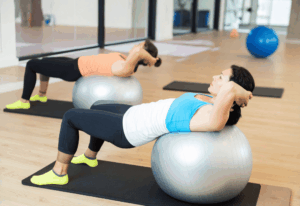
When flexing the spine starting with the head, many people feel instant neck tension—our heads are heavy, and yanking them off the mat first overloads small cervical muscles.
Before any lift that involves the head/neck in flexion, add a tiny preparatory movement: a gentle chin nod to place the skull better on the atlas/axis joints. Imagine lengthening the back of your neck and tilting the head just enough that the chin drifts closer to the chest.
Key idea: less is more. It’s not a crunch and the chin does not touch the chest. This subtle nod simply puts the neck in a comfortably neutral place to share load when the head eventually leaves the mat.
Pilates Head Nod Exercise
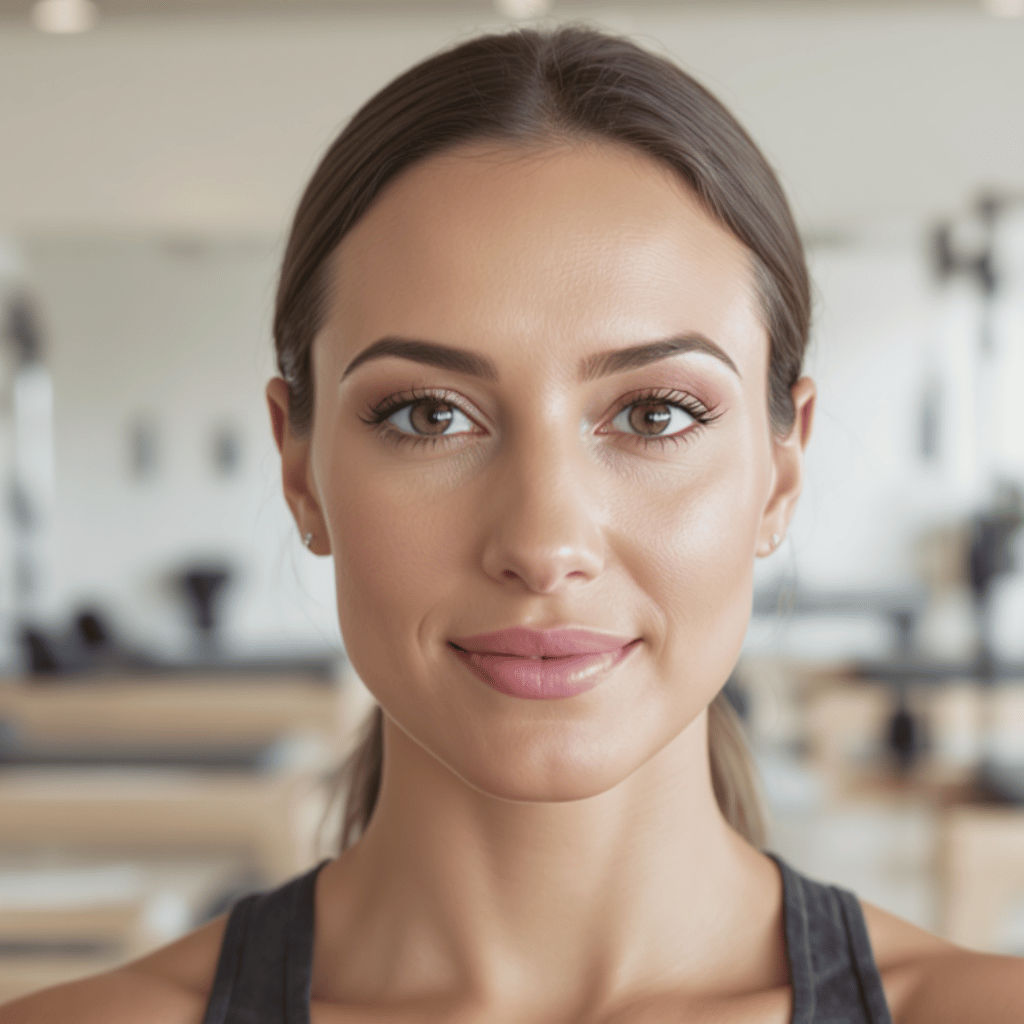
Above you can see this person is:
- In neutral head and cervical alignment
- Chin neither tipped up nor jammed down
- If standing, the head would stack over rib cage, shoulders, and neck
To prepare for your head nod exercise, lie on your back with knees bent, feet flat, and arms by your sides. Re-check the other neutral placements (pelvis, ribs, scapulae, lumbar) you’ve learned so your whole spine is organized before you move.
From the neutral head and cervical position, think of two things:
- Gently nod the chin towards the chest
- While lengthening the back of the neck
Things to remember
- The head stays on the mat for all of this—NO LIFTING yet.
- The chin moves toward the chest; it doesn’t touch the chest.
- The motion is small but noticeable—you’ll feel a clear difference when you later lift.
Try this mini-experiment: first, lift your head without a nod and notice the strain. Then repeat with the chin nod first—most people feel the load distribute more comfortably across the trunk.
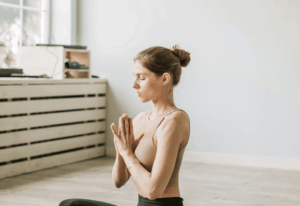
Above: No thank you, Sir!
This last image shows over-flexion—an exaggerated tuck that overworks the cervical flexors. Expect a grumpy neck tomorrow if you practice it that way.
You Just Learned Head and Cervical Spine Placement for pilates
- Why neutral head and cervical placement matters
- How to create and feel that neutral position
- What a head nod is and why it protects the neck
- How to perform the head nod properly
- Want more Pilates principles? Check out this overview of the pilates basic principles.