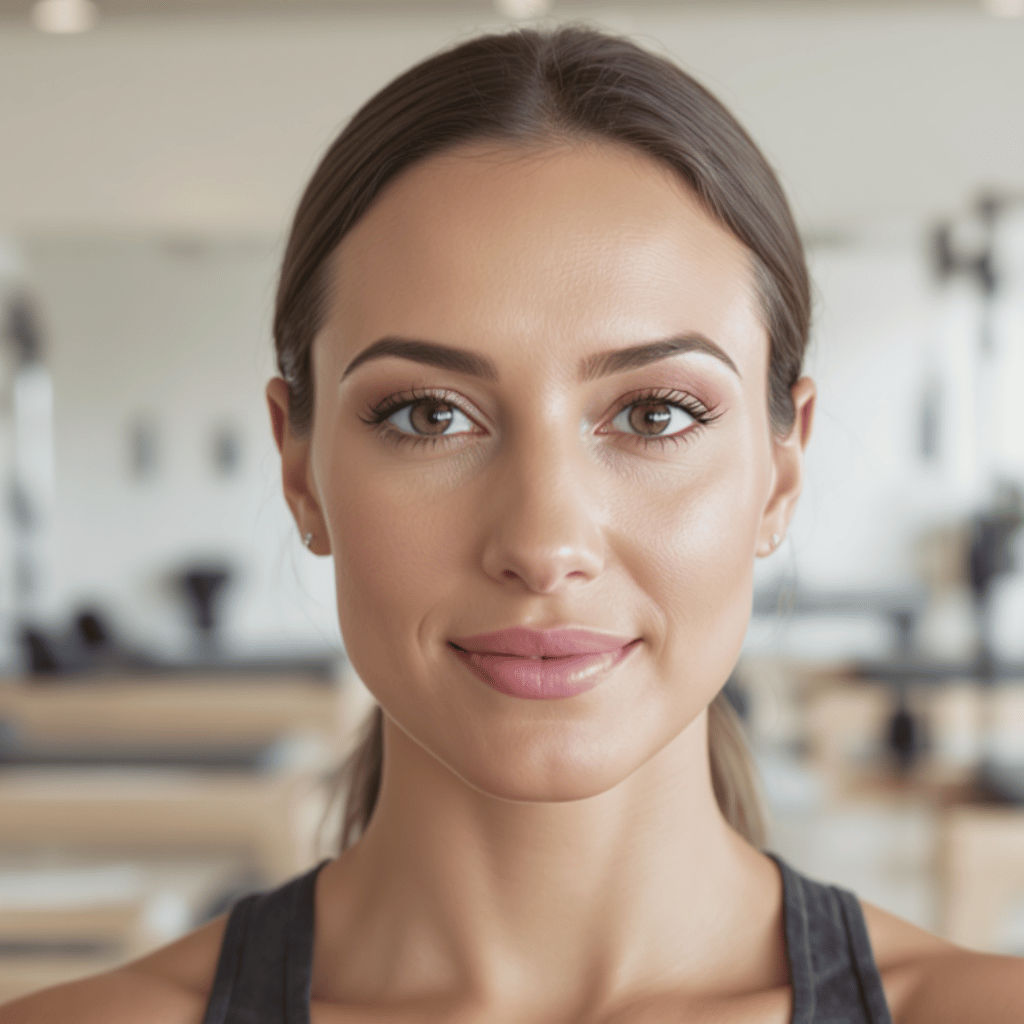
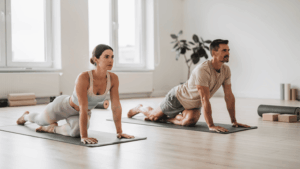
Pilates is a low-impact exercise method that focuses on controlled movement, breathing, and body awareness. In simple terms, Pilates improves strength, posture, flexibility, and mental focus at the same time. Unlike high-intensity workouts, it works deeply on stabilizing muscles while remaining accessible to most fitness levels.
Originally designed to support rehabilitation and overall physical balance, Pilates has evolved into a widely practiced discipline used by beginners, athletes, and health professionals alike. Its benefits go far beyond aesthetics: Pilates supports long-term musculoskeletal health, functional movement, and injury prevention.
One key reason Pilates is so effective is that it emphasizes quality of movement over quantity. Instead of repetitive strain, exercises are performed with precision, engaging the core and improving coordination.
Key takeaways:
- Pilates strengthens deep muscles without stressing the joints
- It improves posture, balance, and body awareness
- The method is suitable for all fitness levels
Pilates is often recommended for people seeking a sustainable form of physical activity. Studies consistently show improvements in core strength and flexibility after just a few weeks of regular practice. Notably, participants practicing Pilates two to three times per week demonstrate measurable gains in trunk stability, which plays a critical role in injury prevention and daily movement efficiency.
How Pilates Builds Core Strength and Improves Posture
One of the most recognized benefits of Pilates is its ability to develop deep core strength. Unlike traditional abdominal workouts that mainly target surface muscles, Pilates activates the deep stabilizing muscles, including the transverse abdominis, pelvic floor, and multifidus muscles along the spine.
These muscles act like a natural corset. When they are strong and properly coordinated, they support the spine, reduce unnecessary strain, and improve overall body alignment. This is why Pilates is often associated with better posture and reduced back discomfort.
Core engagement without compression
A key advantage of Pilates is that it strengthens the core without compressing the spine. Many Pilates exercises are performed lying down, seated, or supported, which minimizes joint stress while still creating strong muscular engagement.
Benefits of this approach include:
- Improved spinal stability during daily movements
- Reduced lower-back tension
- Better control of pelvic alignment
Research suggests that individuals practicing Pilates regularly can experience up to 20–30% improvements in core endurance, which directly influences posture and balance over time. This makes Pilates particularly valuable for people who spend long hours sitting or working at a desk.
Postural awareness in everyday life
Pilates does more than strengthen muscles it trains the nervous system. Through controlled movements and precise breathing, practitioners develop body awareness, learning how to maintain correct alignment even outside the studio.
This postural re-education helps:
- Prevent slouching and rounded shoulders
- Reduce neck and upper-back strain
- Improve standing and walking mechanics
Key data : Consistent Pilates practice has been shown to significantly improve spinal alignment and trunk control within 6 to 8 weeks.
Over time, this awareness translates into more efficient movement patterns, reducing fatigue and lowering the risk of chronic musculoskeletal issues.
Why posture matters beyond appearance
Good posture is not only about aesthetics. Proper alignment allows muscles to work efficiently, reduces joint overload, and supports optimal breathing mechanics. Poor posture, by contrast, increases the risk of pain, stiffness, and movement compensation.
Pilates addresses posture at its root by combining:
- Strengthening of deep stabilizers
- Mobility of the spine and hips
- Conscious breathing patterns
This integrated approach explains why Pilates is often recommended for long-term spinal health, especially for individuals dealing with recurrent back discomfort or postural imbalance.
How Pilates Improves Flexibility, Mobility, and Injury Prevention
While Pilates is often associated with strength, it is equally effective at improving flexibility and joint mobility. Unlike static stretching, Pilates combines controlled movement with muscle engagement, allowing the body to increase range of motion without compromising stability.
This balance between strength and flexibility is what makes Pilates particularly safe and sustainable over time.
Active flexibility instead of passive stretching
Pilates emphasizes active flexibility, meaning muscles lengthen while remaining engaged. This approach protects joints and connective tissues while gradually increasing mobility.
Key benefits include:
- Improved hip and shoulder mobility
- Reduced muscle stiffness
- Better coordination between muscles and joints
By working through controlled ranges of motion, Pilates helps maintain joint integrity, which is essential for long-term physical health.
Practical checklist :
- Move slowly and with control
- Maintain core engagement throughout each exercise
- Breathe deeply to support muscle relaxation
These principles help prevent overstretching and reduce the likelihood of strain or injury.
Supporting joint health and muscle balance
Many injuries occur due to muscle imbalances, where certain muscles are overactive while others remain weak. Pilates directly addresses this issue by promoting balanced strength across the body.
This balanced approach:
- Reduces excessive load on joints
- Improves alignment during movement
- Enhances overall coordination
Pilates is therefore commonly used in injury prevention programs, particularly for the knees, hips, shoulders, and lower back.
Why Pilates is considered low-risk
Pilates is classified as a low-impact exercise method, meaning it places minimal stress on the joints. Movements are smooth and controlled, making it suitable for:
- Beginners
- Older adults
- Individuals returning to activity after injury
Because exercises can be easily modified, Pilates allows participants to progress at their own pace without sacrificing safety.
Over time, this consistency leads to stronger connective tissues, improved movement confidence, and reduced fear of injury an often overlooked but crucial component of physical recovery.
Mental Benefits of Pilates and Overall Well-Being
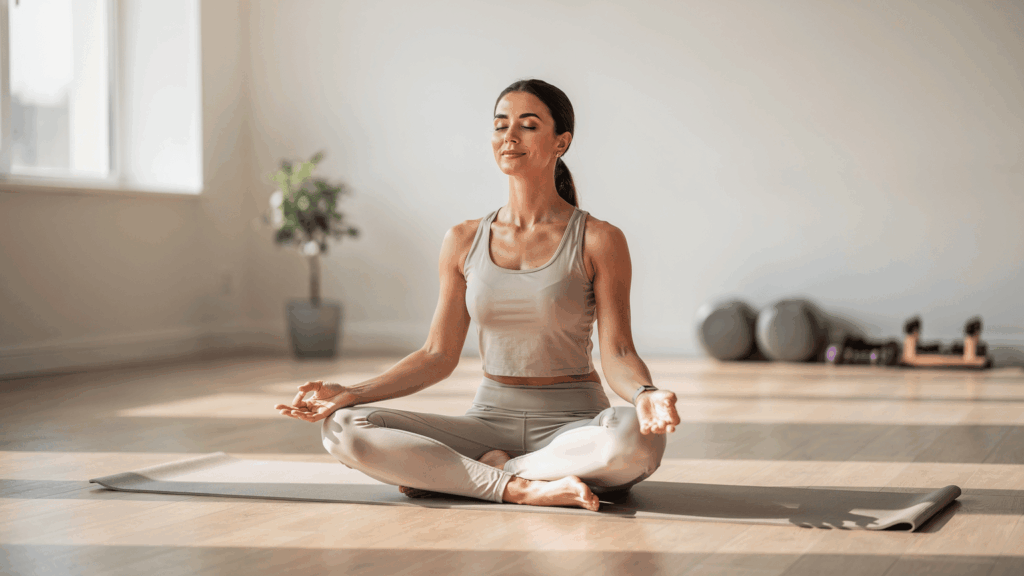
Beyond physical improvements, Pilates offers significant mental and emotional benefits. The method places strong emphasis on breathing, concentration, and controlled movement, creating a powerful mind–body connection.
Pilates encourages practitioners to stay present during each exercise. This focus can help reduce mental overload and support a more balanced nervous system. Over time, many people report feeling calmer, more focused, and mentally refreshed after sessions.
Stress reduction through controlled breathing
Breathing is a fundamental component of Pilates. Exercises are synchronized with deep, intentional breaths that stimulate the parasympathetic nervous system.
This breathing pattern:
- Helps reduce stress hormones
- Promotes relaxation and mental clarity
- Improves oxygen delivery to muscles
Regular practice can therefore contribute to lower perceived stress levels, especially for individuals with sedentary or high-pressure lifestyles.
Improved focus and body awareness
Pilates requires precise movement and coordination, which enhances concentration and neuromuscular control. This cognitive engagement helps sharpen focus while also improving body awareness.
Benefits include:
- Better coordination in daily activities
- Increased confidence in movement
- Reduced mental fatigue
These effects explain why Pilates is often recommended as a complementary practice for people experiencing burnout or mental exhaustion.
Who Can Benefit Most from Pilates?
Pilates is suitable for a wide range of individuals, regardless of age or fitness level. It can be adapted to different needs and physical conditions.
| Profile | Benefits |
| Office workers | Improved posture and reduced back tension |
| Athletes | Better core stability and injury prevention |
| Seniors | Enhanced balance and joint mobility |
| Beginners | Safe introduction to structured movement |
Because Pilates focuses on progressive adaptation, it remains effective whether practiced once or several times per week.
Final Thoughts: Why Pilates Is Worth Practicing
Pilates offers a unique combination of strength, flexibility, posture improvement, and mental clarity. Its low-impact nature makes it accessible, while its depth ensures long-term benefits.
To summarize, Pilates:
- Builds deep core strength
- Enhances flexibility and joint health
- Supports posture and spinal alignment
- Reduces stress and improves focus
For those seeking a sustainable, balanced approach to fitness, Pilates provides a complete system that supports both physical and mental well-being.