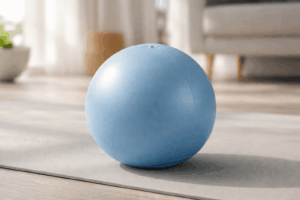
A Pilates ball may look simple, but choosing the wrong one can seriously limit your results. Size, firmness, and material quality all influence balance, muscle activation, and joint safety. According to fitness professionals, an under-inflated or poor-quality ball can reduce core engagement by up to 30% during stability exercises.
Stay with me the right choice can completely change how effective (and comfortable) your workouts feel.
Key data : A Pilates ball with improper firmness can increase spinal instability and lower muscle recruitment, especially during seated or supine exercises.
My top 5 of the best Pilates ball
| Pilates Ball | Size & Format | Firmness Profile | Surface & Grip | Best Use Case |
|---|---|---|---|---|
| 1. ProBody Pilates Small Exercise Ball | 9 inch / compact mini ball | Firm and stable (low compression) | Smooth but non-slip finish | Mat Pilates, inner-thigh squeezes, deep core activation |
| 2. URBNFit Mini Exercise Ball | 9 inch / classic Pilates size | Balanced firmness (moderate give) | Soft-touch surface with good control | Core engagement, posture work, daily Pilates routines |
| 3. Trideer 9-Inch Pilates Ball | 9 inch / standard mini ball | Medium-firm with anti-burst structure | Light texture for improved grip | Barre workouts, rehab-style drills, stability holds |
| 4. TOGU Redondo Ball | 22 cm / slightly larger mini ball | Controlled softness (pressure-adaptive) | Matte, studio-grade finish | Postural training, balance control, gentle strengthening |
| 5. Core Balance Soft Pilates Ball | 23 cm / 9 inch equivalent | Soft and forgiving | Smooth surface, comfort-oriented | Mobility work, low-impact Pilates, comfort-first sessions |
The best Pilates ball offers a balance between grip, resistance, durability, and comfort. Whether you use it for core work, rehabilitation, stretching, or balance training, the right model should support controlled movement without slipping or collapsing. Below, you’ll find a clear selection designed to match different practice levels and workout goals.
1. ProBody Pilates Small Exercise Ball (9 Inch)
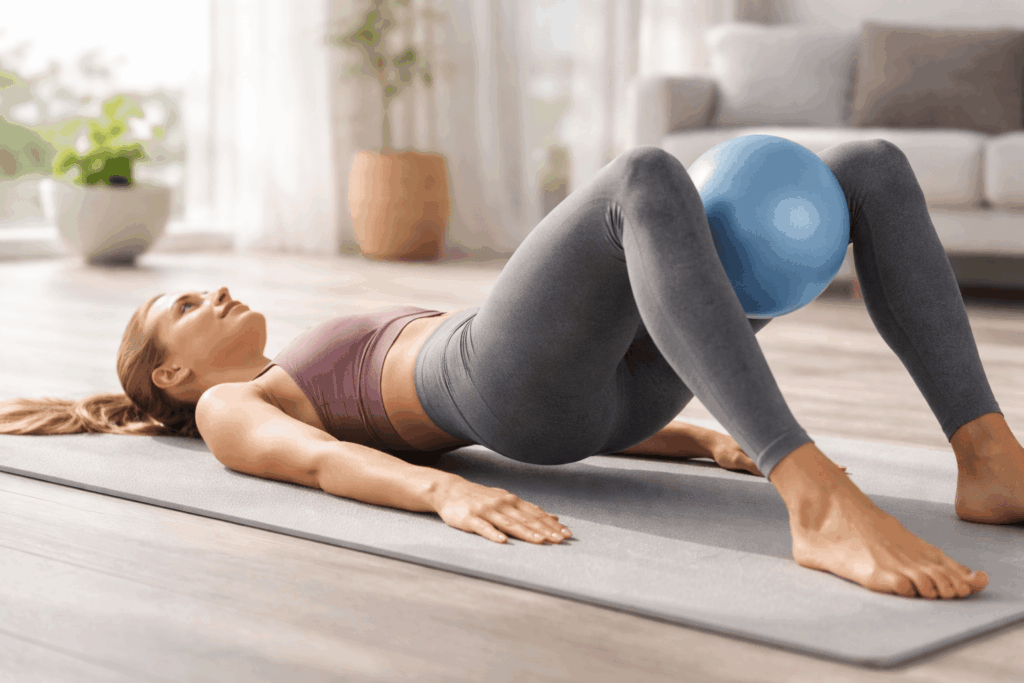
This small Pilates ball is a solid pick if you want reliable firmness for mat work and controlled squeezes (inner thighs, adductors, glutes, deep core). The 9-inch format is easy to position behind the lower back, between the knees, or under the pelvis to improve alignment and proprioception. It’s also practical for home use because it stores easily and doesn’t require much space.
What makes the difference:
- 9-inch format suited to classic Pilates ball drills
- Firm, stable feel for better muscle engagement
- Comfortable surface contact for repeated sessions
👉 Discover ProBody Pilates Small Exercise Ball (9 Inch) on the website.
2. URBNFit Mini Exercise Ball (9”)
If you’re after a versatile Pilates ball for core, balance, and mobility, this one fits most routines nicely. The size is convenient for targeted activation, and the ball integrates well into controlled movement sequences (think pelvic tilts, bridge variations, and abdominal progressions). For many users, it’s a strong “daily driver” to reinforce posture and deepen form awareness.
Key highlights:
- Compact 9” size for mat Pilates and stability work
- Good balance between softness and resistance
- Useful for core activation and alignment drills
👉 Buy URBNFit Mini Exercise Ball (9”) on Amazon.
3. 9-Inch Pilates Ball from Trideer
This is a true Pilates mini ball built for controlled core work, barre, and physical therapy-style routines. The 9-inch format is ideal for inner-thigh squeezes, pelvic stability drills, and deep-core activation without forcing excessive spinal extension. The slightly textured surface helps it stay in place between the knees, ankles, or lower back, while the anti-burst construction adds a layer of safety if pressure changes during use.
What makes it stand out:
- 9-inch size that fits classic mat Pilates sequences
- Anti-burst design for safer training
- Light texture for better grip during squeezes and holds
- Easy to integrate into barre and PT-inspired workouts
👉 Discover 9-Inch Pilates Ball from Trideer on Amazon.
4. TOGU Redondo Ball (22 cm)
This is a more “studio-style” Pilates ball option, often appreciated for controlled training and body awareness work. The 22 cm format sits nicely between classic mini balls and slightly larger soft balls, which can be useful for posture drills, balance progressions, and gentle strengthening. It suits users who want a consistent feel session after session.
Ideal profile:
- Posture and balance-focused practice
- Controlled mobility and core activation
- Users who prefer a slightly larger mini ball
👉 Get TOGU Redondo Ball (22 cm) on Amazon.
5. Core Balance Soft Pilates Ball (23 cm / 9 Inch)
If comfort is high on your list, this soft Pilates ball is a practical choice for Pilates, barre, and gentle stability work. The feel is supportive rather than rigid, which can be helpful for mobility routines and low-impact strengthening. It’s also a good option if you’re sensitive to very firm balls during seated or supine drills.
Details to remember:
- Soft feel for comfort-first sessions
- Useful for mobility, barre, and gentle Pilates
- 23 cm / 9 inch size fits most classic exercises
👉 Discover Core Balance Soft Pilates Ball (23 cm / 9 Inch) on Amazon.
How to choose the best Pilates ball
Selecting the best Pilates ball goes beyond price or brand. The right choice supports posture, enhances muscle activation, and improves overall exercise safety. A poorly chosen ball can compromise balance and reduce the effectiveness of your sessions something we want to avoid.
Checklist practical:
- Correct size: match the ball diameter to your height and exercise type
- Firmness level: enough resistance to engage muscles without discomfort
- Surface grip: prevents slipping during controlled movements
- Material quality: durable, non-toxic, and anti-burst when possible
A quick rule of thumb: smaller balls (20–25 cm) work best for mat Pilates and targeted activation, while larger balls provide more support for balance and posture-based exercises.
Frequently asked questions
What size Pilates ball should I choose?
Most people benefit from a 20–25 cm ball for classic Pilates routines. Taller users or those focusing on balance exercises may prefer slightly larger options.
Should a Pilates ball be soft or firm?
A moderately firm ball offers the best balance between comfort and muscle engagement. Too soft reduces activation; too firm can limit control.
Is a Pilates ball suitable for beginners?
Yes. Pilates balls are excellent for beginners as they provide feedback, support alignment, and help activate deep core muscles safely.
Can I use a Pilates ball for rehabilitation or mobility work?
Absolutely. Softer models are often used in rehabilitation and gentle mobility sessions, especially for spinal and joint-friendly exercises.
Boost your Pilates results with the right ball
Choosing the best Pilates ball can significantly improve stability, posture, and muscle engagement during every workout. Whether your goal is strength, mobility, or gentle conditioning, the right ball becomes a powerful tool for consistent progress.