Short answer: Pilates classes usually cost between $20 and $80 per session, depending on the class format, studio type, and location. Group mat classes sit at the lower end, while private reformer sessions are the most expensive.
If you’re researching Pilates for the first time, pricing can feel confusing. Some studios advertise affordable drop-in rates, while others require monthly memberships that look closer to personal training fees. The reality is that Pilates pricing follows clear rules once you understand what you’re paying for.
Key takeaways:
- Pilates class prices vary widely based on format and class size.
- Group mat classes are the most budget-friendly option.
- Private sessions offer faster progress but cost significantly more.
Pilates is no longer limited to boutique studios. Today, it’s offered in fitness clubs, specialized Pilates studios, rehabilitation centers, and franchise concepts such as Club Pilates. This diversity explains why people often ask both how much does Pilates cost and how much is Club Pilates per month the answer depends heavily on where and how you practice.
What Determines the Price of a Pilates Class?
Pilates pricing isn’t random. Studios base their rates on a few key factors that directly affect your experience and results.
Class type and equipment
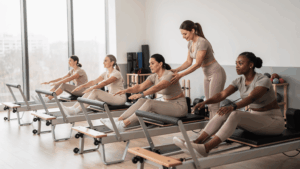
Mat Pilates classes require minimal equipment and allow larger groups, keeping costs lower. Reformer and apparatus-based sessions use specialized machines, which increases overhead and limits the number of participants. This is why reformer classes are consistently more expensive.
Group size and personalization
Smaller classes mean more individual attention. A class with 10–15 participants costs less than one capped at 4–6 people, but the level of feedback and correction is also very different.
Instructor qualifications
Certified Pilates instructors with advanced training or rehabilitation experience often charge higher rates. While this increases the price, it can reduce injury risk and improve technique especially for beginners.
Location and studio model
Urban studios in large cities typically charge more due to higher operating costs. Franchise studios may offer standardized pricing through memberships, while independent studios often rely on class packs or drop-in rates.
Average Pilates Class Prices by Type
Once you understand what drives pricing, it becomes easier to compare Pilates class costs realistically. Below is a simple overview of the most common formats and what they usually cost per session.
Donnée-clé : Smaller classes and specialized equipment are the main reasons Pilates prices increase.
| Pilates class type | Average price per class | Typical use |
| Group mat class | $15 – $30 | Beginners, general fitness |
| Group reformer class | $30 – $50 | Strength, posture, core work |
| Semi-private session | $40 – $70 | More guidance, shared cost |
| Private session | $60 – $100+ | Rehab, personalized goals |
Group mat classes are the most affordable way to practice regularly. They work well if your goal is consistency rather than intensive correction.
Reformer classes cost more because machines are expensive and class sizes are smaller. In return, you get greater resistance control and faster strength gains.
Private sessions are the most expensive option, but they’re often chosen short-term—for example, to learn proper technique, recover from injury, or address postural issues.
At this stage, many people start asking how much does Pilates cost per month, which depends on how often you attend and which class types you choose.
Studio Pilates vs Gym Pilates : Is the Price Difference Justified?
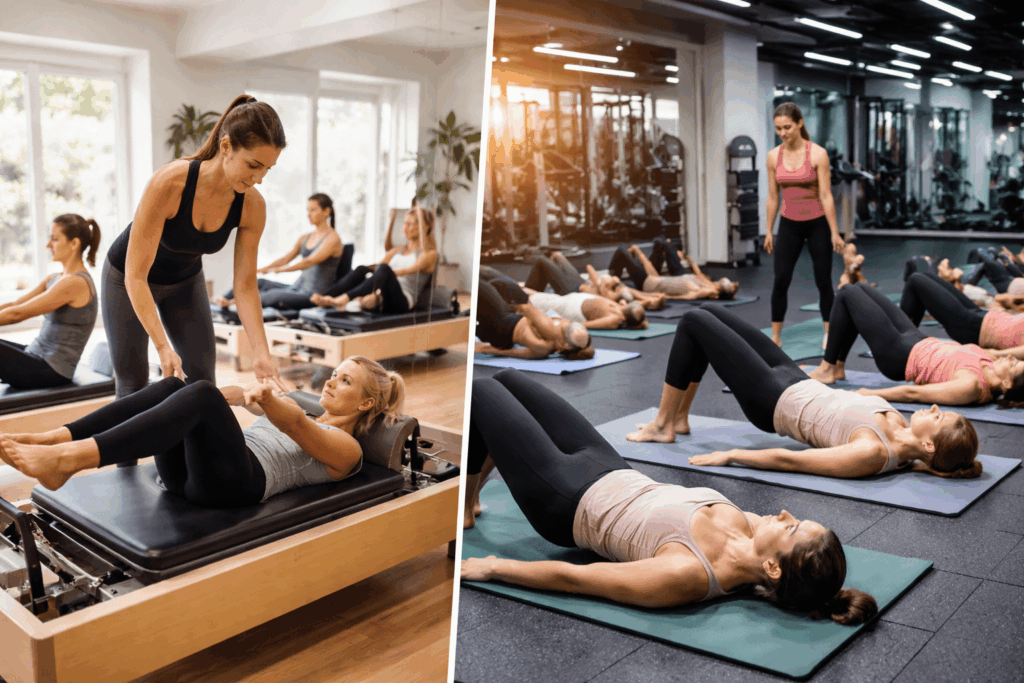
Another major factor behind how much Pilates classes cost is where you practice. Studio Pilates and gym Pilates may look similar on the schedule, but the experience and the pricing can be very different.
Pilates studios
Dedicated Pilates studios usually charge more because they offer:
- Specialized equipment such as reformers and towers
- Smaller class sizes, often capped at 6–10 people
- More hands-on instruction and technique correction
This environment is especially valuable for beginners, people with back or joint discomfort, or anyone looking for faster, safer progress.
Gym-based Pilates
Gym Pilates classes are often included in a monthly membership or offered at a lower drop-in rate. However:
- Classes are usually mat-based
- Group sizes tend to be larger
- Individual feedback may be limited
This can still be a good option if you already know the basics and want a lower-cost way to stay active.
A practical point to keep in mind: repeating movements with poor form, even in affordable classes, can slow progress or create discomfort over time. For some people, investing in a few studio sessions early on helps avoid that issue later.
Monthly Pilates Costs and Memberships: What to Expect
When people ask how much does Pilates cost, they often really mean per month. Monthly spending depends on frequency, class type, and whether you choose drop-in classes or a membership.
Donnée-clé : Practicing Pilates twice per week usually costs between $120 and $300 per month, depending on format and location.
Typical monthly budgets
| Practice frequency | Monthly estimate | Notes |
| 1× per week | $80 – $160 | Best for maintenance |
| 2× per week | $120 – $300 | Most common choice |
| 3×+ per week | $250 – $450+ | Faster progress, higher cost |
Membership-based studios often bundle classes into tiers. That’s why many people search how much is Club Pilates per month: franchise-style studios usually offer plans based on a set number of classes (for example, 4, 8, or unlimited per month). These memberships can lower the per-class price but require consistency to be worth it.
How to keep costs reasonable
- Mix mat classes with occasional reformer sessions
- Use intro offers or starter packages
- Add short-term private sessions only when needed
Bottom line : Pilates typically costs more than a standard group fitness class, but it offers greater precision and long-term value when practiced consistently. Choosing a format that matches both your goals and schedule is the best way to control costs without compromising results.