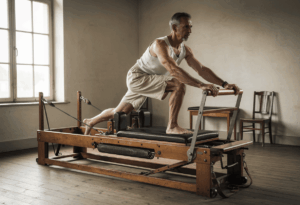
Yes men can absolutely do Pilates, and in many cases, they benefit from it just as much as women, if not more. Pilates is not about flexibility alone or aesthetic movement; it is a strength-based, control-focused training method designed to improve posture, core stability, and joint efficiency.
Despite outdated stereotypes, Pilates was originally developed by a man, Joseph Pilates, and used by athletes, soldiers, and dancers to build resilient bodies. Today, more men are rediscovering Pilates as a serious training tool rather than a gentle stretching routine.
Key takeaways:
- Pilates is a full-body strength method, not a flexibility class.
- Men benefit equally in terms of core power, posture, and injury prevention.
- Pilates complements sports and weight training effectively.
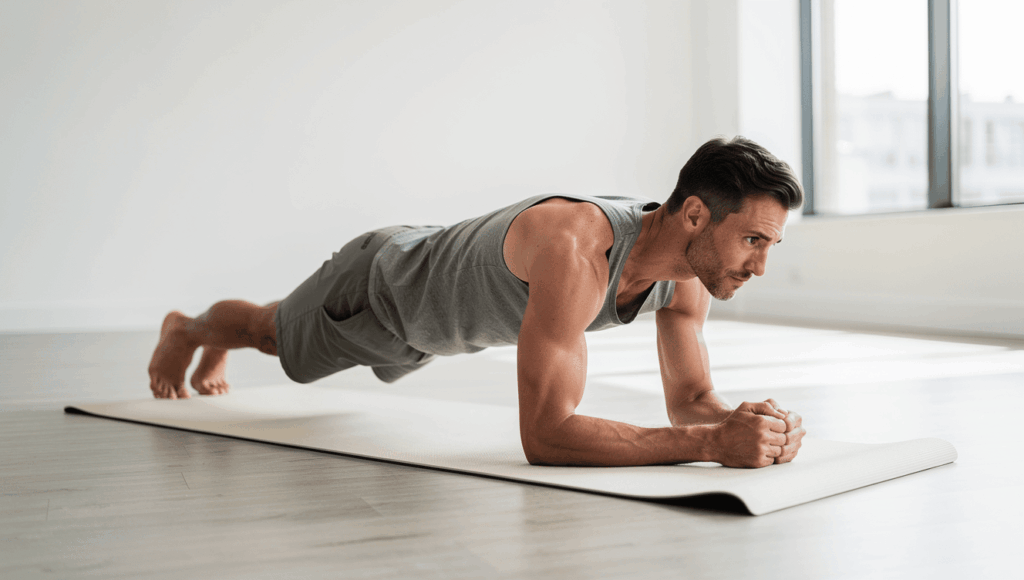
Many men avoid Pilates because they believe it lacks intensity or relevance. In reality, Pilates challenges deep stabilizing muscles that traditional gym training often neglects especially the core, hips, and spine.
Why Pilates Works So Well for Men
Men tend to develop muscle imbalances over time. Heavy lifting, running, cycling, or sitting for long hours can create strong superficial muscles while leaving stabilizers undertrained. Pilates directly targets this issue.
Rather than focusing on maximal load, Pilates emphasizes:
- Controlled resistance
- Precision of movement
- Breathing coordination
- Spinal alignment
This approach improves movement efficiency, not just raw strength. For men dealing with back pain, stiff hips, or recurring injuries, this is often a missing piece in their training routine.
Core strength beyond six-pack muscles
Pilates strengthens the deep core, including the transverse abdominis and pelvic stabilizers. These muscles are essential for:
- Protecting the lower back
- Transferring force during athletic movements
- Maintaining balance and posture
Unlike crunch-based workouts, Pilates builds functional core strength that carries over into daily life and sport.
Common Myths That Keep Men Away from Pilates
“Pilates is only for women”
This is the most common misconception. Pilates has been popularized in female-dominated fitness spaces, but its biomechanical principles are universal. Muscle activation, joint control, and breathing efficiency are not gender-specific.
“Pilates isn’t challenging enough”
Pilates can be deceptively intense. Holding controlled positions under tension activates muscles continuously, often leading to deep fatigue without visible strain. Many men are surprised by how demanding a properly structured Pilates session feels.
Key fact: A controlled Pilates session can activate stabilizing muscles for longer durations than traditional strength training sets.
“It won’t help my sport or lifting”
On the contrary, Pilates improves mobility, balance, and force transfer, which are essential in strength sports, combat sports, and endurance disciplines. It does not replace lifting it enhances it.
Pilates vs Traditional Strength Training for Men
| Aspect | Pilates | Traditional gym training |
| Core engagement | Continuous and deep | Often secondary |
| Joint stress | Low | Moderate to high |
| Mobility | Integrated | Often isolated |
| Injury prevention | High | Variable |
| Muscle symmetry | Strong focus | Can reinforce imbalances |
Pilates fills the gaps that classic resistance training often leaves behind, especially in the hips, spine, and shoulders.
The Real Benefits of Pilates for Men
Pilates offers practical, measurable benefits for men, especially when combined with sports or strength training. Its value lies in improving how the body moves, not just how it looks.
Better posture and reduced back pain
Many men develop poor posture due to long hours sitting or heavy lifting with limited mobility work. Pilates focuses on spinal alignment and core control, which helps reduce lower back tension and shoulder stiffness over time.
Regular practice can lead to:
- Less chronic back discomfort
- Improved standing and sitting posture
- Better awareness of movement habits
Increased strength without joint overload
Pilates strengthens muscles through controlled tension, not heavy external load. This makes it particularly useful for men who want to stay strong while protecting their joints.
It is especially beneficial if you:
- Lift weights regularly
- Play impact sports
- Are recovering from minor injuries
Key fact: Pilates strengthens deep stabilizing muscles that support joints during heavy or explosive movements.
Improved athletic performance
Pilates helps improve balance, coordination, and force transfer, which are essential for sports like running, football, combat sports, or CrossFit. Stronger stabilizers mean better power control and fewer compensations.
Which Men Benefit the Most from Pilates?
Pilates is not reserved for a specific type of man. It adapts well to different goals, ages, and training backgrounds, which explains why it is increasingly used across disciplines.
Men who lift weights or train intensely
If you lift heavy or train frequently, Pilates helps balance muscle development and reduce joint stress. It reinforces weak links often ignored in classic strength programs, especially around the hips, shoulders, and lower back.
Benefits include:
- Better movement control under load
- Reduced risk of overuse injuries
- Improved recovery between sessions
Men dealing with stiffness or recurring pain
Limited mobility, tight hips, or persistent back discomfort are common issues. Pilates improves joint range of motion while maintaining stability, making it ideal for men who feel strong but restricted.
Men new to structured training
Pilates provides a safe entry point into physical activity. Movements are controlled, progressive, and adaptable, allowing beginners to build strength without excessive strain.
Key takeaway: Pilates is most effective for men who want strength, control, and durability not just muscle size.
Final Summary
Yes men can absolutely do Pilates, and it offers clear, practical benefits when practiced consistently. Far from being a gentle or gendered workout, Pilates is a structured strength and control method that supports posture, core stability, and joint health.
In summary, Pilates helps men:
- Build deep core strength that supports the spine
- Improve mobility and movement efficiency
- Reduce injury risk from sports or weight training
- Balance strength with control and coordination
Pilates is most effective when used as a complement to other forms of training. Practicing 1–2 sessions per week is enough for most men to notice better posture, improved movement quality, and reduced discomfort.
Ultimately, Pilates is not about flexibility or appearance it’s about moving better, staying resilient, and training smarter over the long term.