Pilates is a low-impact, full-body exercise method focused on controlled movements, posture, breathing, and core strength. Originally designed to improve physical conditioning and rehabilitation, it is now widely practiced for strength, mobility, and body awareness.
Unlike high-intensity workouts, Pilates emphasizes precision over speed. Movements are slow, intentional, and coordinated with breathing, making it accessible to beginners while still challenging for advanced practitioners.
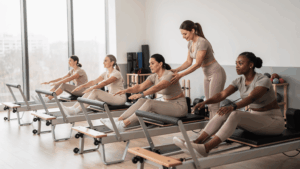
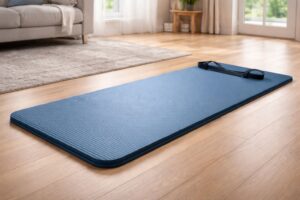
Pilates can be practiced on a mat using body weight or with specialized equipment such as the Reformer. Despite its calm appearance, it is a deeply engaging form of exercise that targets stabilizing muscles often neglected in traditional workouts.
Key takeaways:
- Pilates is a controlled, low-impact form of exercise
- It focuses on core strength, posture, and movement quality
- Suitable for beginners, athletes, and rehabilitation contexts
Pilates is often misunderstood as “easy” because of its smooth movements. In reality, muscle engagement is continuous, especially in the deep core muscles that support the spine. This makes Pilates particularly effective for improving posture, reducing back pain, and enhancing overall movement efficiency.
Where does Pilates come from?
Pilates was developed in the early 20th century by Joseph Pilates, who believed that physical and mental health were deeply connected. His method was initially used for injury rehabilitation and posture correction before becoming a mainstream fitness discipline.
Today, Pilates is practiced worldwide in studios, gyms, and at home, thanks to its adaptability and broad range of benefits.
What kind of exercise is Pilates?
A common question is what kind of exercise Pilates actually is. Pilates is best described as a mind-body exercise that blends strength training, mobility work, and breath control.
It is not cardio-focused like running, nor purely strength-based like weightlifting. Instead, Pilates sits between these disciplines, emphasizing:
- Core stabilization
- Controlled muscle activation
- Joint-friendly movements
- Postural alignment
This unique positioning makes Pilates ideal for people seeking functional strength without joint stress.
The core principles of Pilates
Pilates is built on a set of foundational principles that guide every movement. These principles explain why Pilates feels different from other workouts and why it is so effective over time.
Control and precision
Every exercise is performed with slow, controlled movements. Rather than using momentum, Pilates asks you to consciously engage specific muscles. This improves coordination and reduces unnecessary strain on joints.
Core engagement
At the heart of Pilates lies the core, often referred to as the “powerhouse.” This includes the deep abdominal muscles, lower back, hips, and pelvic floor. Consistent activation of these muscles helps stabilize the spine and improve posture.
Breathing and focus
Breathing in Pilates is intentional and synchronized with movement. Proper breathing supports muscle activation and helps maintain rhythm and control throughout each exercise. Mental focus is equally important, reinforcing the mind-body connection.
Alignment and flow
Pilates places strong emphasis on proper body alignment. Exercises are designed to flow smoothly from one to the next, encouraging balanced movement patterns and reducing muscular imbalances.
Together, these principles explain what kind of exercise Pilates is: a method that prioritizes quality of movement over intensity, making it both effective and sustainable.
The main benefits of Pilates
Pilates offers a wide range of benefits, which explains why it appeals to beginners, athletes, and people returning to movement after injury. Its effectiveness comes from consistent, low-impact muscle engagement rather than intensity.
Improved posture and core strength
One of the most noticeable effects of Pilates is better posture. By strengthening the deep core muscles, Pilates helps support the spine and reduces compensations that often lead to discomfort or chronic tension.
Increased flexibility and mobility
Pilates exercises move joints through controlled ranges of motion. Over time, this leads to greater flexibility without forcing the body into extreme positions, making it especially suitable for people with joint sensitivity.
Reduced injury risk
Because Pilates emphasizes alignment and control, it helps correct muscular imbalances. This can lower the risk of injury, particularly for people who practice other sports or spend long hours sitting.
Balanced muscle tone
Rather than building bulky muscles, Pilates promotes lean, functional strength. Muscles become more responsive, coordinated, and efficient in daily movements.
Key data : Regular Pilates practice can improve core endurance and postural stability within a few weeks when sessions are performed consistently.
These benefits clarify what kind of exercise Pilates is: a method focused on long-term movement quality rather than short-term performance.

Who is Pilates for and how to get started?
Pilates is suitable for nearly everyone, regardless of age or fitness level. Because exercises can be easily modified, it adapts well to different bodies and goals.
Pilates is particularly relevant for:
- People looking to improve posture and core strength
- Individuals recovering from injury or managing back discomfort
- Athletes wanting better movement efficiency and balance
- Beginners seeking a low-impact, sustainable workout
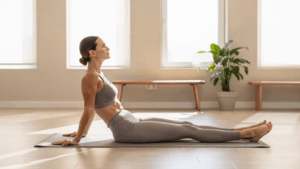
Getting started does not require advanced equipment. Many beginners begin with mat Pilates, using body weight and controlled movements. Short sessions, performed consistently, are often more effective than long, irregular workouts.
Practical checklist :
- Start with basic mat exercises
- Focus on breathing and control, not speed
- Practice 2–3 times per week for consistency
In summary
Pilates is a mind-body exercise method that builds strength, mobility, and body awareness over time. Its controlled approach makes it a reliable option for anyone seeking long-term physical health rather than quick results.